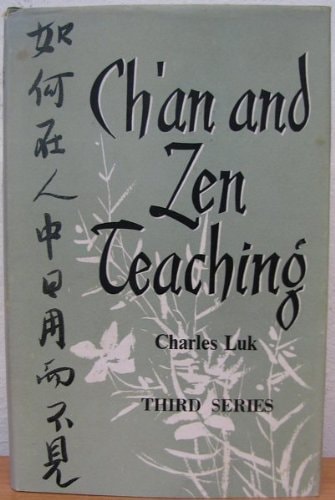
Ch'an and Zen Teaching
0
0
As an Amazon Associate and affiliate partner, Menrva Books earns from qualifying purchases. Learn more
Author Description
Chán (simplified; traditional, abbr. of chánnà (), from Sanskrit dhyāna,[1] meaning "meditation" or "meditative state"[2]) is a school of Mahāyāna Buddhism developed in China from the 6th century CE onwards, becoming dominant during the Tang and Song dynasties. After the Song, Chán more or less fused with the Pure Land school. From China, Chán spread south to Vietnam and east to Korea (where it is known as Seon) and, in the 13th century, to Japan, where it became known as Zen. The Chán/Zen tradition became the best-known instance of Buddhism in the Western World.
Menrva's Summary
THE THESIS
The book explores the historical development and core tenets of Ch'an Buddhism, a significant school of Mahāyāna Buddhism that originated in China. It traces the evolution of Ch'an from its inception in the 6th century CE, its rise to prominence during the Tang and Song dynasties, and its subsequent spread to Vietnam, Korea (as Seon), and Japan (as Zen). The text also touches upon Ch'an's eventual fusion with the Pure Land school and its emergence as the most recognized form of Buddhism in the Western world.
THE SCOPE MAP
- Historical origins of Ch'an Buddhism in China.
- Development and dominance during the Tang and Song dynasties.
- Fusion with the Pure Land school after the Song dynasty.
- Spread of Ch'an to Vietnam, Korea, and Japan.
- The establishment of Zen in Japan.
- Ch'an/Zen's recognition in the Western world.
- The meaning of 'Ch'an' derived from Sanskrit 'dhyāna' (meditation).
THE AUTHORITY PERSPECTIVE
This work appears to offer a foundational overview of Ch'an Buddhism, likely appealing to those interested in the historical and geographical spread of Buddhist traditions. The text's focus on the lineage and development of Ch'an suggests it serves as an introductory or historical survey rather than a deep dive into meditative practices themselves. Its historical scope, from its Chinese origins to its global recognition, positions it as a text for understanding Buddhism's broader cultural impact. The material suggests a scholarly yet accessible approach to the subject matter.
Page Count:
306
Publication Date:
1969-01-01
Publisher:
Rider
ISBN-10:
0090627202
ISBN-13:
9780090627202
Non-Fiction
Religion
Philosophy
Meditation
Buddhism
Community Tags
Similar Books