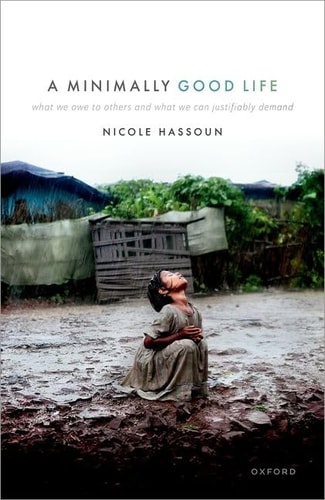
A Minimally Good Life: What We Owe to Others and What We Can Justifiably Demand
0
0
As an Amazon Associate and affiliate partner, Menrva Books earns from qualifying purchases. Learn more
Author Description
What do we owe to each other simply out of respect, or concern, for our common humanity? What can we claim? The United Nations' Sustainable Development Goals and the Universal Declaration of Human Rights as well as many states' constitutions embody competing answers to these questions. Different accounts of what we owe to others out of concern for our common humanity ground divergent accounts of the basic minimum just societies and the international community must help people secure.A Minimally Good Life argues that concern for our common humanity requires helping others live minimally good lives when doing so does not require sacrificing our own ability to live well enough. This, it suggests, provides a unified answer to the question of what we must give to, and can demand from, others as a basic minimum. More precisely, Nicole Hassoun argues that people must obtain the things that let them secure the relationships, pleasures, knowledge, appreciation, worthwhile activities, and other things that a reasonable and caring person free from coercion and constraint would set as a minimal standard of justifiable aspiration. That is, as reasonable, caring, free people, we should put ourselves into each other's shoes and think about what we need to live well enough as each person. Hassoun makes this case by engaging with the main competitors in the literature: those that offer different accounts of the basic minimum and the limits of our obligations. She then defends a new way of helping people in present and future generations reach the sufficiency threshold and of responding to apparent tragedy when helping everyone seems impossible.
Menrva's Summary
THE THESIS
This book investigates the moral obligations individuals and societies have toward one another in securing a basic minimum standard of living for all people. Nicole Hassoun, a philosopher specializing in global justice, utilizes a framework of common humanity to argue that we are obligated to assist others in achieving a minimally good life, provided such assistance does not compromise our own ability to live well. She synthesizes existing human rights discourse and development goals to propose a unified standard for what constitutes a justifiable aspiration for every individual.
THE SCOPE MAP
What You Will Find
- A philosophical analysis of the sufficiency threshold in global ethics.
- A comparative review of competing theories regarding human rights and basic needs.
- A proposed methodology for addressing resource constraints and tragedy in international aid.
Scope Limits
- The text does not provide a comprehensive policy manual for specific governmental implementation.
- It does not offer an exhaustive historical account of all human rights declarations.
THE AUTHORITY PERSPECTIVE
Scholars in political philosophy recognize this work as a rigorous contribution to the debate on global distributive justice. Readers frequently note the academic density of the prose, which is intended for those familiar with contemporary ethical theory.
Page Count:
192
Publication Date:
2024-11-07
Publisher:
Oxford University Press
ISBN-10:
0192856154
ISBN-13:
9780192856159
Philosophy
Politics
Political Philosophy
Ethics & Morality
Human rights
Ethics
Social justice
Community Tags
Other Editions(2)
Similar Books