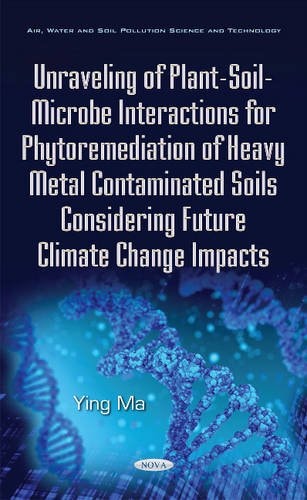
Unraveling of Plant-Soil-Microbe Interactions for Phytoremediation of Heavy Metal Contaminated Soils Considering Future Climate Change Impacts
0
0
As an Amazon Associate and affiliate partner, Menrva Books earns from qualifying purchases. Learn more
Author Description
Anthropogenic activities and pedogenesis of soils derived from ultramafic rocks have caused heavy metal contamination worldwide. During the last two decades, phytoremediation has emerged as a potential eco-friendly tool to clean up heavy metal contaminated environments. However, various climatic stresses (eg: drought, extreme temperature, etc.) can affect physiobiochemical activities of remediating plants as well as heavy metal bioavailability in soils, therefore hampering phytoremediation efficiency. This situation could be ameliorated by exploring the plant-microbe partnership, which can improve plant growth and facilitate plant metal uptake. Plants are able to bioconcentrate (phytoextraction), bioimmobilize (phytostabilization), and/or biotransform (phytovolatilization) heavy metals via in situ rhizosphere processes. The speciation, mobilization, immobilization and distribution of heavy metals in the rhizosphere where root uptake or exclusion takes place, are critical factors that affect the phytoremediation process. Moreover, the effects of climatic stresses on plant growth and metal accumulation vary substantially across physic-chemical-biological properties of the environments and plants used. Developing microbe-assisted phytoremediation for either enhancing (phytoextraction) or reducing (phytostabilization) metal bioavailability in the rhizosphere as well as improving plant establishment, growth and health could significantly speed up the process of bioremediation techniques. In this book, topics of contemporary importance are covered including plant-soil-microbe interactions at the: Molecular level (molecular signals and quorum sensing); Cellular and organismal level (establishment of associative symbiosis of plant and microbes); Biogeochemical level (heavy metal detoxification, mobilization, immobilization, transformation, transport and distribution); Ecosystem level (mechanisms involved in plant-microbe-metal interactions) and at the Technological applicat
Menrva's Summary
THE THESIS
This book investigates the complex interplay between plants, soil, and microbes in the context of phytoremediation for heavy metal-contaminated soils, particularly under the looming threat of climate change. It addresses the challenges posed by climatic stresses like drought and extreme temperatures to both plant physiology and metal bioavailability, exploring how plant-microbe partnerships can enhance phytoremediation efficiency. The work delves into the molecular, cellular, biogeochemical, and ecosystem-level mechanisms governing these interactions, aiming to advance bioremediation techniques.
THE SCOPE MAP
- Molecular mechanisms of plant-soil-microbe interactions, including molecular signals and quorum sensing.
- Establishment of associative symbiosis between plants and microbes at the cellular and organismal level.
- Biogeochemical processes of heavy metal detoxification, mobilization, immobilization, transformation, transport, and distribution.
- Ecosystem-level mechanisms involved in plant-microbe-metal interactions.
- Technological applications and advancements in microbe-assisted phytoremediation.
- The impact of future climate change scenarios on phytoremediation effectiveness.
- Strategies for enhancing phytoextraction and phytostabilization of heavy metals.
THE AUTHORITY PERSPECTIVE
The book addresses a critical and timely issue at the intersection of environmental science, soil science, and climate change. Its focus on the synergistic roles of plants and microbes in phytoremediation suggests a comprehensive exploration of complex biological and chemical processes. The detailed breakdown of interactions from molecular to ecosystem levels indicates a thorough scientific treatment, likely appealing to researchers and advanced students in environmental engineering and soil science.
Page Count:
153
Publication Date:
2016-01-01
Publisher:
Nova Science Publishers, Incorporated
ISBN-10:
1634842502
ISBN-13:
9781634842501
Science
Non-Fiction
Climate Change
Bioremediation
Soil Science
Heavy metals
Community Tags
Similar Books



Reader Comments
Share Your Thoughts
No comments yet. Be the first to share your thoughts!