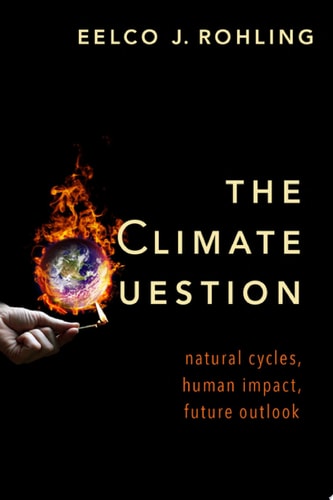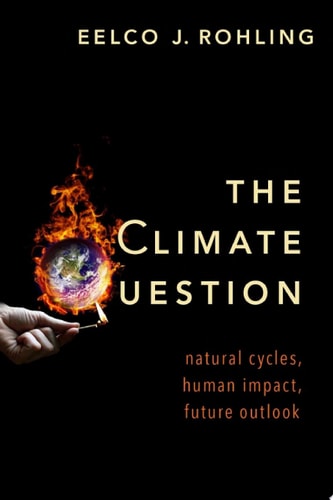
The Climate Question: Natural Cycles, Human Impact, Future Outlook
0
0
As an Amazon Associate and affiliate partner, Menrva Books earns from qualifying purchases. Learn more
Author Description
In 2015, annual average atmospheric carbon dioxide (CO2) levels surpassed a level of 400 parts per million (ppm) for the first time in three million years. This has caused widespread concern among climate scientists, and not least among those that work on natural climate variability in prehistoric times, before humans. These people are known as "past climate" or palaeoclimate researchers, and author Eelco J. Rohling is one of them. The Climate Question offers a background to these concerns in straightforward terms, with examples, and is motivated by Rohling's personal experience in being intensely quizzed about whether modern change is not all just part of a natural cycle, whether nature will not simply resolve the issue for us, or whether it won't be just up to some novel engineering to settle things quickly. This book discusses in straightforward terms why climate changes, how it has changed naturally before the industrial revolution made humans important, and how it has changed since then. It compares the scale and rapidity of variations in pre-industrial times with those since the industrial revolution, infers the extent of humanity's impacts, and looks at what these may lead to in the future. Rohling brings together both data and process understanding of climate change. Finally, the book evaluates what Mother Nature could do to deal with the human impact by itself, and what our options are to lend her a hand.
Menrva's Summary
THE THESIS
This book investigates whether modern climate change is a result of natural cycles or human activity by comparing historical palaeoclimate data with contemporary industrial impacts. Author Eelco J. Rohling, a specialist in palaeoclimate research, utilizes his expertise to address common skepticism regarding the human role in global warming. By synthesizing geological records and modern atmospheric data, he constructs a framework that distinguishes between pre-industrial climate variability and the current, rapid shifts driven by human carbon emissions.
THE SCOPE MAP
What You Will Find
- Analysis of atmospheric CO2 levels over a three-million-year timeline
- Comparative study of natural climate cycles versus industrial-era changes
- Evaluation of potential natural feedback loops and human-led mitigation strategies
Scope Limits
- Does not provide a comprehensive engineering manual for geoengineering solutions
- Focuses primarily on physical climate processes rather than political or economic policy analysis
THE AUTHORITY PERSPECTIVE
Experts recognize this work as a highly accessible synthesis of complex palaeoclimate data for a general audience. Readers frequently note that the prose remains clear and objective while effectively addressing common misconceptions about climate science.
Page Count:
176
Publication Date:
2019-01-01
Publisher:
Oxford University Press
ISBN-10:
0190910895
ISBN-13:
9780190910891
Non-Fiction
Science
Earth Science
Trades & Technology
Palaeoclimate
Alternative & Renewable
Climatic changes
Climate Change
Power Resources
Community Tags
Similar Books