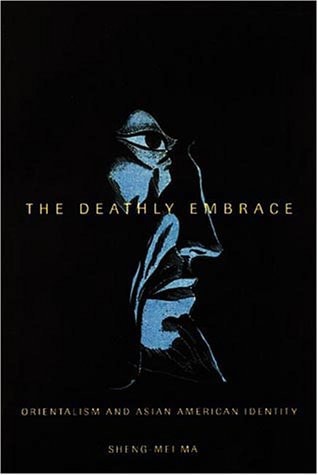
The Deathly Embrace: Orientalism and Asian American Identity
0
0
As an Amazon Associate and affiliate partner, Menrva Books earns from qualifying purchases. Learn more
Author Description
Asian American Studies/Literary Theory A polemical analysis of the ways Orientalism speaks through the texts of prominent Asian American writers. Asian American resistance to Orientalism-the Western tradition dealing with the subject and subjugation of the East-is usually assumed. And yet, as this provocative work demonstrates, in order to refute racist stereotypes they must first be evoked, and in the process the two often become entangled. Sheng-mei Ma shows how the distinguished careers of post-1960s Asian American writers such as Maxine Hong Kingston, Amy Tan, Frank Chin, and David Henry Hwang reveal that while Asian American identity is constructed in reaction to Orientalism, the two cultural forces are not necessarily at odds. The vigor with which these Asian Americans revolt against Orientalism in fact tacitly acknowledges the family lineage of the two. To identify the multitude of historical forms appropriated by the deathly embrace of Orientalism and Asian American ethnicity, Ma highlights four types of cultural encounters, embodied in four metaphors of physical states: the "clutch of rape" in imperialist adventure narratives of the 1930s and 1940s, as seen in comic strips of Flash Gordon and Terry and the Pirates and in the Disney film Swiss Family Robinson; the "clash of arms" or martial metaphors in the 1970s and beyond, embodied in Bruce Lee, Kingston's The Woman Warrior, and the video game Mortal Kombat; U.S. multicultural "flaunting" of ethnicity in the work of Amy Tan and in Disney's Mulan; and global postcolonial "masquerading" of ethnicity in the Anglo-Japanese novelist Kazuo Ishiguro. Broad in scope, penetrating in insight, Ma's work exposes the myriad ways in which Orientalism, an integral part of American culture, speaks through the texts of Asian Americans and non-Asian Americans alike. The result is a startling lesson in the construction of cultural identity. Sheng-mei Ma is associate professor in the Department of Amer
Menrva's Summary
THE THESIS
This book polemically analyzes how Orientalism, the Western tradition of dealing with the East, is deeply interwoven with the construction of Asian American identity, even in resistance to it. Sheng-mei Ma, an associate professor in the Department of American Studies, argues that prominent post-1960s Asian American writers, while attempting to refute Orientalist stereotypes, often end up evoking and entangling with them. The work examines how the very act of revolt against Orientalism can tacitly acknowledge a shared lineage. Ma identifies four key metaphors of cultural encounter that illustrate this complex relationship: the
THE SCOPE MAP
- What You Will Find:
- An analysis of how Orientalism is evoked and entangled within the texts of prominent Asian American writers.
- Exploration of the relationship between Asian American identity construction and Orientalism, challenging the assumption of pure resistance.
- Examination of four types of cultural encounters through metaphors: "clutch of rape," "clash of arms," multicultural "flaunting," and postcolonial "masquerading."
- Case studies of writers and cultural products including Maxine Hong Kingston, Amy Tan, Frank Chin, David Henry Hwang, Flash Gordon, Terry and the Pirates, Disney's Swiss Family Robinson and Mulan, Bruce Lee, and Kazuo Ishiguro.
THE AUTHORITY PERSPECTIVE
This work is recognized for its polemical and provocative analysis of the complex relationship between Orientalism and Asian American identity. It challenges conventional understandings by demonstrating how resistance to Orientalism can inadvertently reinforce its tropes. The book's broad scope and penetrating insights reveal the pervasive influence of Orientalism across various cultural forms and authors, offering a startling lesson in the construction of cultural identity.
Page Count:
208
Publication Date:
2000-01-01
Publisher:
Univ of Minnesota Pr
ISBN-10:
0816637105
ISBN-13:
9780816637102
Non-Fiction
Literary theory
Community Tags
Similar Books