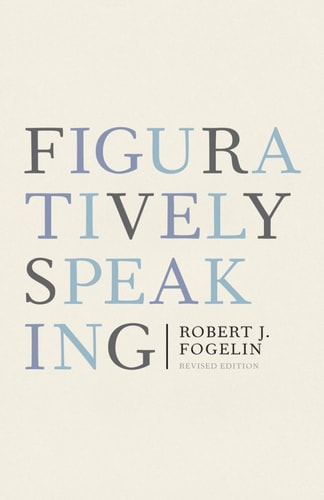
Figuratively Speaking: Revised Edition
0
0
As an Amazon Associate and affiliate partner, Menrva Books earns from qualifying purchases. Learn more
Author Description
In this updated edition of his brief, engaging book, Robert J. Fogelin examines figures of speech that concern meaning--irony, hyperbole, understatement, similes, metaphors, and others--to show how they work and to explain their attraction. Building on the ideas of Grice and Tversky, Fogelin contends that figurative language derives its power from its insistence that the reader participate in the text, looking beyond the literal meaning of the figurative language to the meanings that are implied. With examples ranging from Shakespeare, John Donne, and Jane Austen to e.e. cummings, Bessie Smith, and Monty Python, Fogelin demonstrates that the intellectual and aesthetic force of figurative language is derived from the opportunity it provides for unlimited elaboration. Fogelin presents a modern restatement of the view, first put forward by Aristotle, that metaphors are to be treated as elliptical similes. He then offers a detailed defense of this "comparativist" view of metaphors in response to criticisms that have been brought against it by a series of eminent philosophers. This new edition is updated to reflect more recent work on the topic and will interest philosophers, linguists, and literary theorists.
Menrva's Summary
THE THESIS
How do figures of speech function to generate meaning beyond their literal definitions? Robert J. Fogelin, a philosopher known for his work in logic and language, argues that figurative language relies on the active participation of the reader to decode implied meanings. By building upon the foundational theories of Grice and Tversky, he defends the comparativist view that metaphors function as elliptical similes, providing a rigorous intellectual framework for understanding rhetorical devices.
THE SCOPE MAP
What You Will Find
- Analysis of irony, hyperbole, understatement, similes, and metaphors
- A defense of the comparativist theory of metaphor against contemporary philosophical critiques
- Diverse examples from literature, poetry, music, and comedy
Scope Limits
- The text focuses primarily on the philosophical and linguistic mechanics of figurative language rather than a comprehensive historical survey of rhetoric.
THE AUTHORITY PERSPECTIVE
Experts and academics recognize this text as a concise, focused contribution to the philosophy of language. Readers frequently note that while the prose is accessible, it maintains a high level of analytical rigor suitable for students of linguistics and literary theory.
Page Count:
143
Publication Date:
2011-01-01
Publisher:
Oxford University Press
ISBN-10:
0190453842
ISBN-13:
9780190453848
Philosophy
Non-Fiction
Politics
History & Surveys
Kindle eBooks
Reference
Kindle Store
English & College Success
Figures of speech
Words Language & Grammar
English
Categories
Literary theory
Semantics
Linguistics
Metaphor
Community Tags
Similar Books