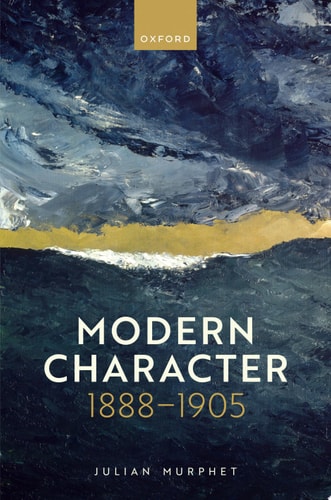
Modern Character: 1888-1905
0
0
As an Amazon Associate and affiliate partner, Menrva Books earns from qualifying purchases. Learn more
Author Description
How was modern character made or remade at the turn of the twentieth century? Modern Character: 1888-1905 considers a range of literary and dramatic texts, showcasing the extraordinary efforts of various writers to rethink and reinvent 'human character' during this period. Arguing that many of the most significant breakthroughs happened in the small theatres of Europe in the 1890s, the book's first section demonstrates how the countervailing currents of Naturalism and Symbolism created a vortex in which time-honoured truisms about character consistency, depth, and verisimilitude were jettisoned. Works by Ibsen, Strindberg, Maeterlinck, and Chekhov provide evidence of a searching and critical campaign against assumed models of characterization.The second section turns to contemporary prose narratives, with attention to Knut Hamsun, Oscar Wilde, Joris-Karl Huysmans, Gabriele D'Annunzio, Henry James, George Egerton, Edith Wharton, Kate Chopin, and Joseph Conrad, to ask what writers working in the novel, novella, and short-story forms were doing to contest prevailing expectations about represented persons. Inconsistency, bad faith, fragmentation, and unconscious motives creep into the character spaces of these fictions. Character description recedes and plots disintegrate; a penumbral negativity intrudes just where identification and sympathy might have been achieved.Ultimately, Julian Murphet proposes that the 'modern character' emerging over this decade and a half presents a radical rethinking of a venerable category of narrative and dramatic art, with profound consequences for the coming century.
Menrva's Summary
THE THESIS
How did the conceptualization of human character undergo a radical transformation within literature and drama at the turn of the twentieth century? Julian Murphet, a scholar of modernism and literary theory, examines the shift from traditional models of character consistency to the fragmented, inconsistent representations that defined the early modern period. By analyzing a wide array of European and American texts, he argues that the period between 1888 and 1905 served as a critical laboratory for reinventing the human subject in narrative art.
THE SCOPE MAP
What You Will Find
- Analysis of theatrical movements including Naturalism and Symbolism.
- Examination of dramatic works by Ibsen, Strindberg, Maeterlinck, and Chekhov.
- Investigation of prose narratives by authors such as Henry James, Oscar Wilde, and Joseph Conrad.
- Theoretical exploration of concepts like bad faith, fragmentation, and unconscious motives in characterization.
Scope Limits
- The study is strictly confined to the years 1888 through 1905.
- The analysis focuses primarily on European and Western literary and dramatic traditions.
THE AUTHORITY PERSPECTIVE
Scholars and critics recognize this work as a significant contribution to the study of modernist characterization and the evolution of narrative form. Readers frequently note the academic density of the prose, which provides a rigorous framework for understanding the transition from Victorian realism to modernist subjectivity.
Page Count:
288
Publication Date:
2024-01-01
Publisher:
Oxford University Press
ISBN-10:
0192863126
ISBN-13:
9780192863126
Modernism
20th Century
Literary Criticism
Drama Studies
19th Century
Literary History
Community Tags
Similar Books