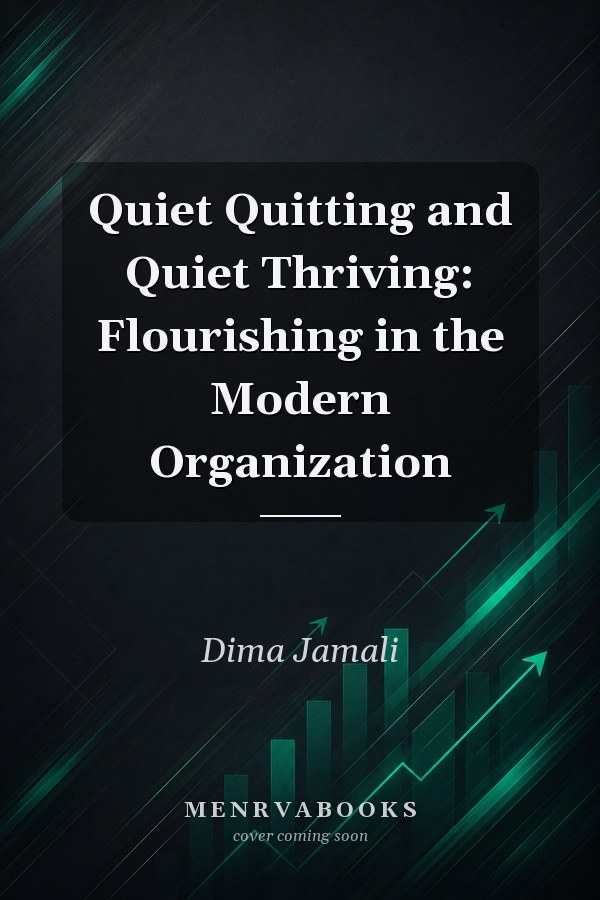
Quiet Quitting and Quiet Thriving: Flourishing in the Modern Organization
0
0
As an Amazon Associate and affiliate partner, Menrva Books earns from qualifying purchases. Learn more
Author Description
"Quiet Quitting" is about people, the most important determiners of wealth creation in every organization. It is about the growing failure of leaders, managers, and supervisors in those organizations to understand their moral obligations to the employees with whom they work. Today's employees have loudly declared, "We are not a commodity. We are people and we matter." The dismal record of leaders and organizations in failing to create commitment and trust has gotten worse, and those Top Management Team members who guide all organizations seem to have lost their way in understanding the basic truth that they are repeatedly underutilizing the human potential of the people who they desperately hope will assist them in achieving important goals. As the authors of this book, we have felt a strong moral obligation to help practitioners, scholars, students, and employees to understand the Quiet Quitting phenomenon. In writing this book, we have begun to understand the unfortunate reality that so many leaders and organizations have lost their way and are failing in their moral duty to those who they have the responsibility to serve. Leadership, when most effective, is ultimately a moral responsibility and an obligation to create a partnership with others. Leaders succeed best when their employees become fully empowered and engaged "owners and partners" of an organization's mission and purpose. Great leadership is less about control than it is about commitment. Earning the commitment, trust, and loyalty of employees occurs best when those being led believe that their leaders care authentically about their welfare, growth, and wholeness. Thriving and flourishing in organizations requires that those who lead understand their covenantal obligation to those whom they lead. Only when leaders create systems, processes, and practices that demonstrate that they understand the importance of employees will those employees give their organizations their best efforts. We have attempted
Menrva's Summary
THE THESIS
This book investigates the moral obligations of leaders in modern organizations and the phenomenon of 'quiet quitting.' The authors argue that leaders have failed to understand their duty to employees, leading to underutilization of human potential and a loss of commitment and trust. The book posits that effective leadership is a moral responsibility focused on creating partnerships where employees feel empowered and engaged as owners. True leadership, it suggests, is built on commitment, trust, and authentic care for employee welfare, growth, and wholeness, which in turn fosters thriving and flourishing within the organization.
THE SCOPE MAP
- Analysis of the 'quiet quitting' phenomenon and its roots in leadership failure.
- Exploration of the moral obligations leaders have towards their employees.
- Discussion on the importance of employee engagement, commitment, and trust.
- Framework for leaders to foster an environment where employees can thrive and flourish.
- Strategies for creating systems, processes, and practices that value employees.
- Emphasis on leadership as a moral responsibility and partnership rather than control.
THE AUTHORITY PERSPECTIVE
The book frames 'quiet quitting' as a symptom of leadership's failure to recognize employees as people who matter, rather than commodities. It asserts that leaders have a moral obligation to foster commitment and trust, which is best achieved by genuinely caring for employee welfare and growth. The authors suggest that when leaders fulfill this covenantal obligation, employees are more likely to be fully empowered, engaged, and contribute their best efforts, leading to organizational flourishing. The text aims to guide practitioners, scholars, students, and employees in understanding this critical dynamic in contemporary workplaces.
Page Count:
0
Publication Date:
2024-01-01
Publisher:
Nova Science Publishers
ISBN-13:
9798891135239
Business
Non-Fiction
Leadership
Management
Community Tags
Similar Books










Reader Comments
Share Your Thoughts
No comments yet. Be the first to share your thoughts!