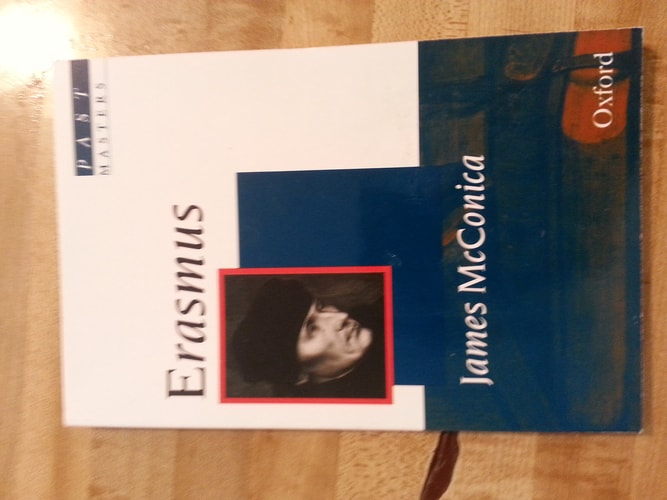
Erasmus
0
0
As an Amazon Associate and affiliate partner, Menrva Books earns from qualifying purchases. Learn more
Author Description
The humanistic philosophy of Erasmus has influenced thought and literature in Europe from the Reformation to the present day. As a religious thinker, however, the Dutch scholar has long been perceived as a witty and erudite critic of Catholicism, whose thinking was ultimately eclipsed by Luther's purist strategies. The recent growth of interest in ecumenism, McConica argues here, should inspire new interest in Erasmus' philosophy with its "unorthodox" emphasis on the need for social harmony.
Menrva's Summary
THE THESIS
This work investigates the enduring relevance of Erasmus' humanistic philosophy and his specific contributions to religious thought within the context of the Reformation. James Kelsey McConica, a noted scholar of the period, utilizes historical analysis to challenge the traditional view of Erasmus as merely a critic of Catholicism. He argues that the scholar's focus on social harmony and ecumenism offers a significant, often overlooked framework for understanding early modern intellectual history.
THE SCOPE MAP
What You Will Find
- An examination of Erasmus' intellectual influence from the Reformation to the modern era.
- A critical reassessment of the dichotomy between Erasmian humanism and Lutheran theology.
- Analysis of the scholar's writings regarding social cohesion and religious tolerance.
Scope Limits
- The text does not provide a comprehensive chronological biography of Erasmus' entire life.
- It does not focus on the technical theological debates of the period beyond their impact on social philosophy.
THE AUTHORITY PERSPECTIVE
Scholars frequently cite this volume as a concise and accessible entry point for understanding the philosophical nuances of Erasmus. It is widely regarded as a foundational text for those interested in the intersection of Renaissance humanism and religious reform movements.
Page Count:
112
Publication Date:
1991-05-30
Publisher:
Oxford University Press
ISBN-10:
019287599X
ISBN-13:
9780192875990
Philosophy
Biography
History
Religion
Renaissance
European History
Community Tags
Similar Books