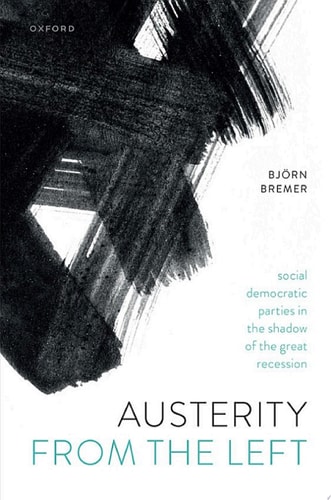
Austerity from the Left: Social Democratic Parties in the Shadow of the Great Recession
0
0
As an Amazon Associate and affiliate partner, Menrva Books earns from qualifying purchases. Learn more
Author Description
Austerity became the predominant fiscal policy response to the Great Recession in Europe. After a brief period of 'emergency Keynesianism' from 2008 to 2010, even the centre-left abandoned plans for deficit spending and accepted austerity as the dogma of the day. In this book, Björn Bremer explains how this came about and explores its political consequences, combining qualitative and quantitative methods and drawing on a wide range of empirical evidence to study both the demand- and supply-side of politics. Based on this evidence, the book argues that a complex interaction of electoral and ideational pressures pushed social democratic parties towards orthodox fiscal policies. As government debt became a taboo following the Greek sovereign debt crisis, social democratic parties endorsed austerity to increase their perceived economic competence and fiscal credibility. This decision was legitimized by economic ideas inspired by supply-side economics, which had become popular among social democrats at the end of the twentieth century. Although the book shows that social democratic austerity was not inevitable, powerful feedback effects of the Third Way thus trapped and divided the centre-left during the crisis. This undermined the ability of social democratic parties to oppose austerity and eventually contributed to their electoral crisis in the shadow of the Great Recession.
Menrva's Summary
THE THESIS
This book investigates why social democratic parties across Europe abandoned Keynesian stimulus in favor of austerity policies following the 2008 Great Recession. Björn Bremer, a political scientist, utilizes a mixed-methods approach to analyze the intersection of electoral pressures and shifting economic ideologies. He argues that the perceived necessity of maintaining fiscal credibility, coupled with the long-term influence of Third Way supply-side economic ideas, constrained the policy options available to center-left parties during the sovereign debt crisis.
THE SCOPE MAP
What You Will Find
- Comparative analysis of social democratic party responses to the Great Recession across multiple European nations.
- Integration of quantitative electoral data and qualitative analysis of party manifestos and internal discourse.
- Examination of the 'Third Way' ideological legacy on modern fiscal policy.
Scope Limits
- The analysis focuses primarily on the period surrounding the Great Recession and the immediate aftermath of the Greek sovereign debt crisis.
- The study does not provide a comprehensive history of social democracy outside of the European context.
THE AUTHORITY PERSPECTIVE
Experts recognize this work as a rigorous contribution to the study of contemporary political economy and the decline of traditional social democratic platforms. Readers frequently note the academic density of the prose, which makes it a valuable resource for scholars and students of European political history.
Page Count:
305
Publication Date:
2023-01-01
Publisher:
OUP Oxford
ISBN-10:
0192872389
ISBN-13:
9780192872388
Economics
Comparative Government
Comparative Politics
Fiscal Policy
Great Recession
Community Tags
Similar Books