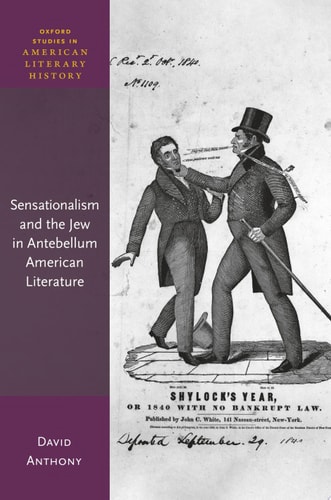
Sensationalism and the Jew in Antebellum American Literature
0
0
As an Amazon Associate and affiliate partner, Menrva Books earns from qualifying purchases. Learn more
Author Description
This book examines the charged but mostly overlooked presence of the sensational Jew in antebellum literature. This stereotyped character appears primarily in the pulpy sensation fiction of popular writers like George Lippard, Ned Buntline, Emerson Bennett, and others. But this figure also plays an important role in the sometimes sensational work of canonical writers such as Nathaniel Hawthorne, Edgar Allan Poe, and Walt Whitman. Whatever the medium, this character, always overdetermined, does consistent cultural work. This book contends that, as the figure who embodies money and capitalism in the antebellum imagination, the sensational Jew is the character who most fully represents a felt anxiety about the increasingly unstable nature of a range of social categories in the antebellum US, and the sense of loss and self-hatred so often lurking in the background of modern Gentile identity. Each chapter examines a different form of sensationalism (urban gothic; sentimental city mysteries; anti-Tom plantation narratives; etc.), and a different set of anxieties (threats to class status; collapsing regional identity; the uncertain status of Whiteness and other racial categories; etc.). Throughout, the sensational Jew acts both as a figure of proteophobia (fear of disorder and ambivalence), and as the figure who embodies in uncanny form a more fulfilling and socially coherent form of identity that predates the modern liberal selfhood of the post-Enlightenment world. The sensational Jew is therefore a revealing figure in antebellum culture, as well as an important antecedent to contemporary antisemitism in the US.
Menrva's Summary
THE THESIS
This book investigates the cultural function and symbolic significance of the stereotyped Jewish character within antebellum American literature. Prof. David Anthony utilizes a framework of cultural history and literary analysis to argue that this figure served as a vessel for anxieties regarding capitalism, social instability, and the construction of modern Gentile identity. By examining both popular sensation fiction and canonical works, the author demonstrates how this character acted as a focal point for fears surrounding class, race, and the erosion of traditional social categories.
THE SCOPE MAP
What You Will Find
- Analysis of popular sensation fiction by authors such as George Lippard, Ned Buntline, and Emerson Bennett.
- Examination of canonical literary works by Nathaniel Hawthorne, Edgar Allan Poe, and Walt Whitman.
- A thematic breakdown of sensationalist subgenres including urban gothic, city mysteries, and anti-Tom plantation narratives.
- Theoretical exploration of proteophobia and the development of post-Enlightenment selfhood.
Scope Limits
- The study is strictly confined to the antebellum period of the United States.
- It does not provide a comprehensive history of Jewish life in America, focusing instead on the literary representation of the 'sensational Jew' as a cultural construct.
THE AUTHORITY PERSPECTIVE
Scholars recognize this work as a significant contribution to the study of American literary history and the evolution of racial and religious stereotypes. Readers frequently note the academic density of the prose and the author's rigorous application of cultural theory to nineteenth-century texts.
Page Count:
224
Publication Date:
2023-01-01
Publisher:
Oxford University Press
ISBN-10:
0192871730
ISBN-13:
9780192871732
American History
Antebellum
Antisemitism
Literary Criticism
Social History
Community Tags
Similar Books