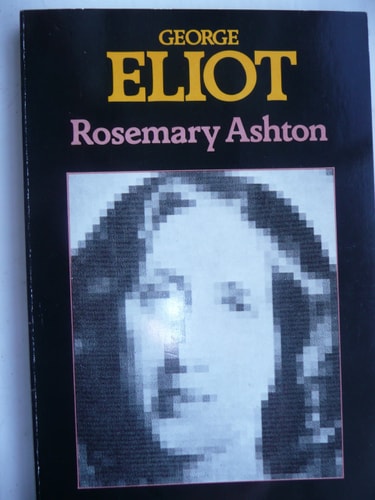
George Eliot (Past Masters)
0
0
As an Amazon Associate and affiliate partner, Menrva Books earns from qualifying purchases. Learn more
Author Description
After the publication of Middlemarch in 1871-2, the English reading public hailed George Eliot as the greatest novelist of English provincial life. Using an analytical, quasi-scientific approach to writing, she consciously rejected the "silly novels by lady novelists" that she so detested. In this volume, Rosemary Ashton reveals that George Eliot aimed to teach "aesthetically" rather than dogmatically through her novels. Her tolerant, free-thinking philosophy of humanity--remarkable for the Victorian age--remains refreshing and enlightening for readers today.
Menrva's Summary
THE THESIS
How did George Eliot transform the Victorian novel into a vehicle for philosophical inquiry and aesthetic education? Rosemary Ashton, a scholar of Victorian literature, examines Eliot's intellectual development, her rejection of contemporary literary tropes, and her commitment to a secular, humanistic worldview that challenged the dogmatic constraints of her era.
THE SCOPE MAP
What You Will Find
- Analysis of Eliot's transition from provincial life chronicler to philosophical novelist
- Examination of her critical essays and their influence on her fiction
- Contextualization of her work within the broader Victorian intellectual climate
Scope Limits
- Does not provide a comprehensive day-to-day biography of Eliot's personal life
- Focuses primarily on her literary and philosophical output rather than her private correspondence
THE AUTHORITY PERSPECTIVE
Scholars and students of Victorian literature frequently cite this volume as a concise, high-quality introduction to Eliot's intellectual framework. It is widely regarded as a reliable resource for understanding the philosophical underpinnings of her major novels.
Page Count:
112
Publication Date:
1984-01-26
Publisher:
Oxford University Press
ISBN-10:
0192876260
ISBN-13:
9780192876263
Non-Fiction
Biography
Victorian
Literary Criticism
Community Tags
Similar Books