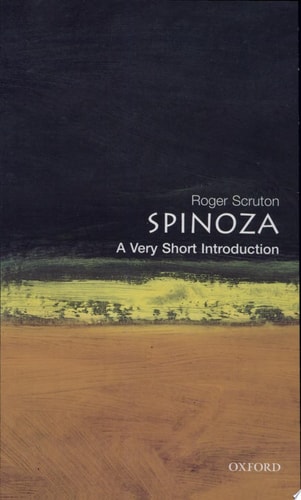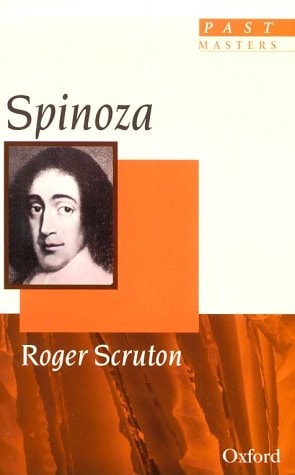
Spinoza (Past Masters)
0
0
As an Amazon Associate and affiliate partner, Menrva Books earns from qualifying purchases. Learn more
Author Description
Father of the Enlightenment and the last guardian of the medieval world, Spinoza made a brilliant attempt to reconcile the conflicting moral and intellectual demands of his epoch and to present a vision of man as simultaneously bound by necessity and eternally free. Ostracized by the Jewish community in Amsterddam to which he was born, Spinoza developed a political philosophy that set out to justify the secular state ruled by a liberal constitution, and a metaphysics that sought to reconcile human freedom with a belief in scientific explanation. Here, Roger Scruton presents a clear and systematic analysis of Spinoza's thought and shows its relevance to today's intellectual preoccupations.
Menrva's Summary
THE THESIS
This work investigates how Baruch Spinoza attempted to reconcile the rigid demands of scientific necessity with the human requirement for moral and political freedom. Roger Scruton, a noted philosopher and academic, utilizes a systematic analytical framework to examine Spinoza's metaphysical and political writings. He situates Spinoza as a pivotal figure bridging medieval thought and the Enlightenment, arguing that his work remains vital for understanding modern secular and liberal governance.
THE SCOPE MAP
What You Will Find
- Analysis of Spinoza's political philosophy regarding the secular state and liberal constitutions
- Examination of Spinoza's metaphysics and the concept of human freedom within a deterministic universe
- Contextualization of Spinoza's life within the Jewish community of Amsterdam
Scope Limits
- The text does not provide an exhaustive historical biography of Spinoza's personal life
- It does not offer a comprehensive critique of all subsequent Spinozist scholarship
THE AUTHORITY PERSPECTIVE
Experts frequently cite this volume as a concise and accessible entry point for students of philosophy seeking to understand Spinoza's complex arguments. Readers note the clarity of Scruton's prose, which successfully distills dense metaphysical concepts into a manageable format for non-specialists.
Page Count:
112
Publication Date:
1986-12-04
Publisher:
Oxford University Press
ISBN-10:
0192876309
ISBN-13:
9780192876300
Biography
Philosophy
Metaphysics
Enlightenment
Political Philosophy
Community Tags
Similar Books