Tolstoy
0
0
As an Amazon Associate and affiliate partner, Menrva Books earns from qualifying purchases. Learn more
Author Description
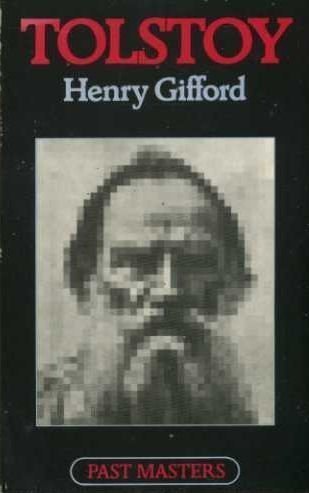
This volume focuses on Tolstoy's significance as a thinker in his own time, as well as in the present. Henry Gifford sets him and his views in the context of nineteenth-century Russia and Europe. He also offers a compelling account of Tolstoy's difficulties in establishing his vocation as a teacher in his own village school, his educational theory, his religious thought, his practical recommendations for living, and his controversial views on art.
Menrva's Summary
THE THESIS
This volume investigates the intellectual legacy of Leo Tolstoy by examining his dual role as a nineteenth-century Russian writer and a provocative social and religious thinker. Henry Gifford, a scholar of Russian literature, utilizes historical context and primary texts to evaluate Tolstoy's contributions to educational theory, religious philosophy, and aesthetic criticism. The work argues that Tolstoy's significance extends beyond his fiction, positioning him as a complex moralist whose practical recommendations for living remain relevant to contemporary discourse.
THE SCOPE MAP
What You Will Find
- Analysis of Tolstoy's educational experiments in his village school
- Examination of Tolstoy's religious thought and moral philosophy
- Contextualization of Tolstoy within nineteenth-century European and Russian intellectual history
- Critical assessment of Tolstoy's controversial theories on art
Scope Limits
- Does not provide a comprehensive biographical account of Tolstoy's entire life
- Does not offer a detailed literary analysis of his major novels
THE AUTHORITY PERSPECTIVE
Experts recognize this text as a concise and accessible introduction to the philosophical dimensions of Tolstoy's work. Readers frequently note that the prose is scholarly yet clear, making it a useful resource for those seeking to understand the ideological foundations of Tolstoy's later life.
Page Count:
96
Publication Date:
1984-01-26
Publisher:
Oxford University Press
ISBN-10:
0192875442
ISBN-13:
9780192875440
Philosophy
Biography
Literary Criticism
Russian History
Educational Theory
Community Tags
Similar Books