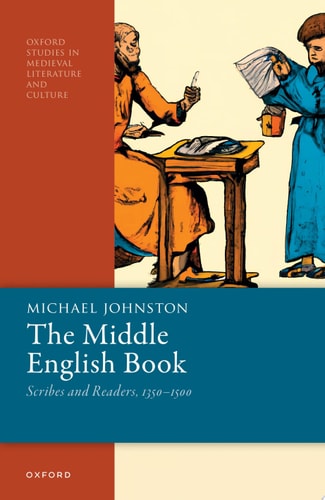
The Middle English Book: Scribes and Readers, 1350-1500
0
0
As an Amazon Associate and affiliate partner, Menrva Books earns from qualifying purchases. Learn more
Author Description
The monograph series Oxford Studies in Medieval Literature and Culture showcases the plurilingual and multicultural quality of medieval literature and actively seeks to promote research that not only focuses on the array of subjects medievalists now pursue--in literature, theology, and philosophy, in social, political, jurisprudential, and intellectual history, the history of art, and the history of science--but also that combines these subjects productively. It offers innovative studies on topics that may include, but are not limited to, manuscript and book history; languages and literatures of the global Middle Ages; race and the post-colonial; the digital humanities, media and performance; music; medicine; the history of affect and the emotions; the literature and practices of devotion; the theory and history of gender and sexuality, ecocriticism and the environment; theories of aesthetics; medievalism.The Middle English Book addresses a series of questions about the copying and circulation of literature in late medieval England: How do we make sense of the variety of manuscripts surviving from this period? Who copied and disseminated these diverse manuscripts? Who read the literary texts that they transmit? And what was the relationship between those copying literature and those reading it? To answer these questions, this book examines 202 literary manuscripts from the period 1350 to 1500. First, this study suggests that most surviving manuscripts fall into four categories, depending on the proximity and relationship of that manuscript's scribes and readers. But beyond proposing these new categories, this book also looks at the history of writing practices, and demonstrates the ubiquity of bureaucracies within late medieval England. As a result, The Middle English Book argues that literary production was a decentered affair, one that took place within these numerous, modest, yet complex, bureaucracies.
Menrva's Summary
THE THESIS
How did the mechanisms of copying and circulation define the production of literature in late medieval England? Michael V. Johnston, a scholar of medieval manuscript culture, investigates the relationship between scribes and readers by analyzing a corpus of 202 literary manuscripts from 1350 to 1500. He argues that literary production was not a centralized activity but rather a decentralized process embedded within the numerous, modest bureaucracies that permeated English society during this era.
THE SCOPE MAP
What You Will Find
- A systematic analysis of 202 literary manuscripts produced between 1350 and 1500.
- A four-part classification system for manuscripts based on the proximity of scribes to readers.
- An examination of the intersection between bureaucratic writing practices and literary dissemination.
Scope Limits
- The study focuses primarily on the English context and does not provide an exhaustive survey of continental European manuscript traditions.
- The analysis is restricted to the period between 1350 and 1500, excluding earlier or later developments in book production.
THE AUTHORITY PERSPECTIVE
Scholars in the field of medieval studies recognize this work as a significant contribution to the understanding of late medieval book culture and manuscript transmission. Readers frequently note the academic density of the prose and the rigorous methodology applied to the study of scribal practices.
Page Count:
304
Publication Date:
2023-01-01
Publisher:
Oxford University Press
ISBN-10:
0192871773
ISBN-13:
9780192871770
History
Paleography
English literature
Book History
Literary Criticism
Community Tags
Similar Books