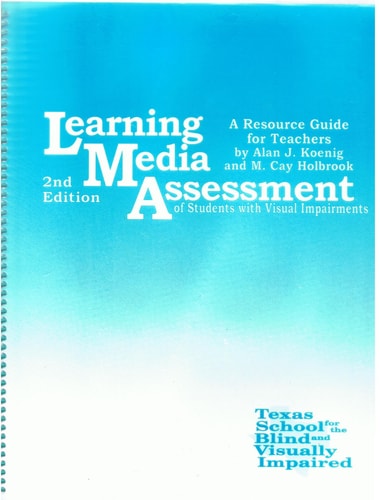
Learning Media Assessment of Students with Visual Impairments: A Resource Guide for Teachers
0
0
As an Amazon Associate and affiliate partner, Menrva Books earns from qualifying purchases. Learn more
Author Description
Designed to assist in the selection of appropriate literacy media for students with visual impairments, this guide outlines the essential elements of learning media assessments. Chapter 1 provides an overview of the learning media assessment (LMA) process. Included is a discussion of Texas law and regulations that govern LMA. Chapter 2 documents the student's use of sensory channels utilizing an objective procedure and recording form. Chapter 3 helps team members translate the student's use of sensory channels into appropriate general learning media by providing guidelines and a checklist. Chapter 4 presents a process for making an initial decision on the literacy medium in which the student will begin a conventional reading and writing instructional program. The following chapter presents a process for continuous assessment of the student's literacy media. The last chapter presents a comprehensive process for selecting functional learning and literacy media for students with additional disabilities. It provides guidelines for determining the student's use of sensory channels and selecting functional media. Appendices include a specific assessment procedure to compare the effectiveness of various print media for students with low vision, assessment forms, and reading strategy lessons. (Contains 10 references.) (CR)
Menrva's Summary
THE THESIS
This guide provides teachers with a structured approach to selecting appropriate literacy media for students with visual impairments. The book details the Learning Media Assessment (LMA) process, including legal considerations in Texas, and offers methods for documenting a student's sensory channel usage. It guides teams in translating sensory channel use into general learning media and making initial decisions about literacy instruction, with subsequent chapters addressing continuous assessment and the selection of functional media for students with additional disabilities.
THE SCOPE MAP
- Overview of the Learning Media Assessment (LMA) process
- Discussion of Texas law and regulations governing LMA
- Procedure for documenting student's use of sensory channels
- Guidelines and checklist for translating sensory channel use into general learning media
- Process for initial decision-making on literacy medium
- Process for continuous assessment of literacy media
- Comprehensive process for selecting functional learning and literacy media for students with additional disabilities
- Appendices with specific assessment procedures for low vision, assessment forms, and reading strategy lessons
THE AUTHORITY PERSPECTIVE
This resource is designed as a practical guide for educators working with students with visual impairments. The detailed chapters and appendices suggest a comprehensive and systematic approach to assessment and media selection. The inclusion of legal considerations and specific assessment tools indicates its utility for teachers seeking to implement effective literacy programs. The book aims to equip educators with the necessary frameworks and checklists to make informed decisions regarding student learning media.
Page Count:
220
Publication Date:
1995-01-01
Publisher:
Texas School for the Blind and Visually Impaired
ISBN-10:
1880366193
ISBN-13:
9781880366196
Non-Fiction
Self-help
Special Education
Teaching Resources
Education
Community Tags
Other Editions(2)
Similar Books