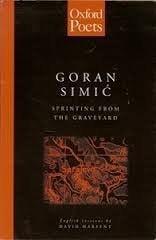
Sprinting from the Graveyard
0
0
As an Amazon Associate and affiliate partner, Menrva Books earns from qualifying purchases. Learn more
Author Description
Sprinting from the Graveyard is a brilliant and ghastly series of poems by Serbian poet Goran Simić. Based on Simić's three harrowing years spent with his muslim wife and their two young children during the seige of Sarajevo, the poems are remarkably unpolitical, and instead are offered in the vein of simple observation with touches of irony, often as plain as a simple newspaper report. This powerful style makes each poem all the more moving and dreadful as it drives home the day-to-day detail of resident's lives, such as the bleak laughter of an eyewitness, and accounts of the incredible energy summoned up by those struggling to move on. Translated into English by acclaimed poet David Harsent, this compelling collection brings to vivid life the candid face of war.
Menrva's Summary
THE PULSE
The central conflict arises from the struggle to maintain humanity and domestic normalcy while trapped within the brutal, claustrophobic environment of the siege of Sarajevo. The poet documents the daily existence of his family during three years of conflict, focusing on the immediate, visceral reality of survival rather than abstract political commentary. Through a series of observational verses, the narrative framework captures the mundane details of life under fire, utilizing irony and plain language to contrast the horror of war with the persistence of human activity. The speaker acts as a witness, navigating the physical constraints of a besieged city while attempting to protect his wife and children from the encroaching violence.
INSIDE THE PAGES
- Focus on domestic life amidst military conflict
- Use of irony to highlight the absurdity of war
- Observational, reportage-style poetic structure
- Emphasis on the psychological weight of daily survival
- Translation by David Harsent preserving the original tone
- Themes of resilience and the persistence of memory
- Minimalist language to convey maximum impact
- Direct, unadorned imagery of urban destruction
THE COLLECTIVE ECHO
Readers and critics frequently highlight the collection's ability to render the horrors of war through a lens of quiet, observational clarity. Discussion often centers on the poet's choice to avoid overt political rhetoric in favor of documenting the small, intimate moments of life under siege. The pacing is noted for its deliberate, reportage-like quality, which forces the reader to confront the reality of the situation without the interference of sentimentality. Many observers appreciate how the work balances the bleakness of the setting with the persistent, often ironic, energy of the human spirit. The collection is widely regarded as a significant contribution to war literature for its refusal to look away from the mundane details of survival.
Page Count:
64
Publication Date:
1997-04-24
Publisher:
Oxford University Press
ISBN-10:
0192880233
ISBN-13:
9780192880239
Contemporary
Poetry
War
Translation
Community Tags
Similar Books