Policing Liberal Society
0
0
As an Amazon Associate and affiliate partner, Menrva Books earns from qualifying purchases. Learn more
Author Description
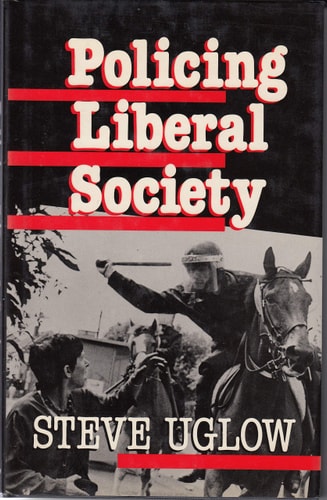
The author outlines the historical development of the police force, analyzes their established role, the ways in which it has changed and the prospects for the future. He argues that the capacity of the police to reduce crime-rates is inevitably marginal, pointing to the fact that the public not only discover and report the majority of offences, but also provide the solutions. The police have an undefined and complex relationship with the law, the State and the community. The obscurity of their tasks and range of powers not only makes their job a very difficult one but also renders the whole police institution vulnerable to authoritarianism. The author suggests that we should concern ourselves with the formal constitutional status of the force, protecting its independence and extending its accountability.
Menrva's Summary
THE THESIS
This work investigates the fundamental tension between the role of the police force and the preservation of democratic values within a liberal society. Steve Uglow, an expert in legal studies, examines the historical evolution of policing to argue that the institutional capacity of the police to impact crime rates is inherently limited. He posits that the police function is often obscured by complex relationships with the state and the public, creating a structural vulnerability to authoritarian overreach that requires constitutional reform.
THE SCOPE MAP
What You Will Find
- Historical development of the modern police institution
- Analysis of the relationship between police, the law, and the state
- Evaluation of police efficacy in crime reduction
- Proposals for constitutional accountability and independence
Scope Limits
- Does not provide a comprehensive manual for modern police tactics
- Does not cover international policing models outside of the primary liberal framework
THE AUTHORITY PERSPECTIVE
Scholars and students of criminology frequently cite this text for its clear articulation of the constitutional dilemmas inherent in policing. Experts highlight the author's balanced approach to institutional accountability as a foundational perspective for understanding the limits of state power.
Page Count:
176
Publication Date:
1988-06-23
Publisher:
Oxford University Press
ISBN-10:
0192892185
ISBN-13:
9780192892188
History
Subjects
Law Enforcement
Sociology
Criminology