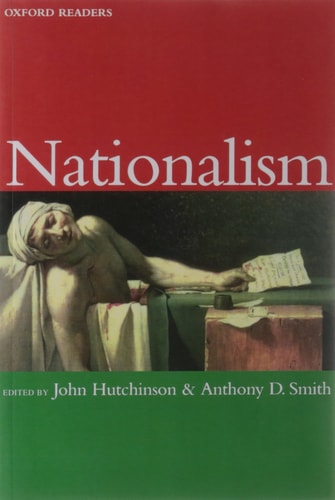
Nationalism: Oxford Readers
0
0
As an Amazon Associate and affiliate partner, Menrva Books earns from qualifying purchases. Learn more
Author Description
Achieving prevalence as an ideology in the political and social ferment of late 18th-century Europe and America, nationalism first found expression during the course of such historical upheavals as the American and French Revolutions. Its founders and early sponsors--Rousseau, Herder, Fichte, Korais, and Mazzini--looked to nationalism as the manifestation of modern humanity's most essential aspirations: autonomy, unity, identity. Born of notions regarding popular freedom and sovereignty that had been gathering momentum for generations, it conjured up images of a modernizing West at once hungry for change and yearning for a return to age-old concepts of fraternity and ancient heritage. Since that time nationalism, having taken on countless different dimensions, remains a vital and dynamic force for change--whether for good or otherwise.Despite only recently becoming the subject of scholarly debate, nationalism has been the focus of a truly prodigious amount of writing. This important Oxford Reader makes the topic more accessible by offering a broad, authoritative treatment of the key contributions to the subject, while giving unprecedented depth to recent debates and issues. Edited by two of the field's most influential scholars, the readings are representative of the vast array of experience and scholarship that have shaped the concept of nationalism for over two centuries. From Ernest Renan's What is a Nation?, written in the 1880s, to the more current views of the 1990s, Nationalism gathers under one cover an impressive array of writing on everything from imagined communities to ethno-regional movements. In no other volume will students of politics, history, sociology, anthropology, international relations, and cultural studies have access to such a definitive appraisal of one of the modern world's most influential--and explosive--ideas.
Menrva's Summary
THE THESIS
This volume investigates the historical evolution, ideological foundations, and contemporary manifestations of nationalism as a primary force in modern political and social life. Editors John W. Hutchinson and Anthony D. Smith, both established scholars in the field, curate a comprehensive collection of primary and secondary texts to map the intellectual trajectory of nationalist thought. The work argues that nationalism functions as a dynamic, multifaceted phenomenon that has continuously shaped global identity and state sovereignty since the late 18th century.
THE SCOPE MAP
What You Will Find
- A chronological selection of seminal essays and writings from the 1880s to the 1990s.
- Theoretical frameworks regarding imagined communities and ethno-regional movements.
- Foundational perspectives from historical figures such as Rousseau, Herder, Fichte, and Mazzini.
Scope Limits
- The collection focuses primarily on Western-centric developments and academic discourse.
- It does not provide an exhaustive history of every specific nationalist conflict in the 21st century.
THE AUTHORITY PERSPECTIVE
Experts recognize this volume as a foundational reader for students across the social sciences due to its authoritative selection of primary source material. Readers frequently note the academic density of the prose, which serves as a definitive reference for those studying the complexities of statehood and identity.
Page Count:
392
Publication Date:
1995-01-01
Publisher:
Oxford University Press
ISBN-10:
0192892606
ISBN-13:
9780192892607
History
Anthropology
Nationalism
Sociology
International relations
Community Tags
Similar Books