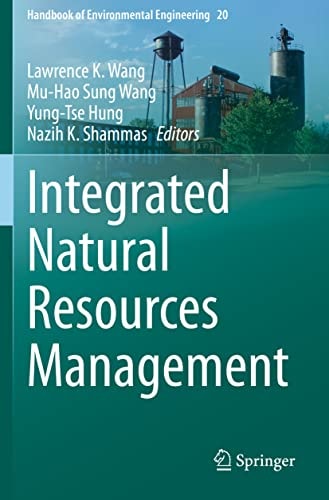
Integrated Natural Resources Management
0
0
As an Amazon Associate and affiliate partner, Menrva Books earns from qualifying purchases. Learn more
Author Description
This edited book has been designed to serve as a natural resources engineering reference book as well as a supplemental textbook. This volume is part of the Handbook of Environmental Engineering series, an incredible collection of methodologies that study the effects of resources and wastes in their three basic forms: gas, solid, and liquid. It complements two other books in the series including "Natural Resources and Control Processes" and "Environmental and Natural Resources Engineering". Together they serve as a basis for advanced study or specialized investigation of the theory and analysis of various natural resources systems. The purpose of this book is to thoroughly prepare the reader for understanding the topics of global warming, climate change, glacier melting, salmon protection, village-driven latrines, engineers without borders (USA), surface water quality analysis, electrical and electronic wastes treatment, water quality control, tidal rivers and estuaries, geographic information systems, remote sensing applications, water losses investigations, wet infrastructure, lake restoration, acidic water control, biohydrogen production, mixed culture dark anaerobic fermentation, industrial waste recycle, agricultural waste recycle, recycled adsorbents, heavy metals removal, magnetic technology, recycled biohydrogen materials, lignocellulosic biomass, extremely halotolerant bacterial communities, salt pan and salt damaged soil. The chapters provide information on some of the most innovative and ground-breaking advances in resources conversation, protection, recycling, and reuse from a panel of esteemed experts.
Menrva's Summary
THE THESIS
This edited volume investigates the multifaceted challenges and innovative solutions within natural resources engineering, aiming to serve as both a comprehensive reference and a supplemental textbook. It builds upon existing works in the Handbook of Environmental Engineering series to explore the effects of resources and wastes in their gas, solid, and liquid forms, preparing readers for complex topics such as global warming, climate change, and sustainable resource management. The book synthesizes cutting-edge research from esteemed experts on conservation, protection, recycling, and reuse.
THE SCOPE MAP
- Comprehensive methodologies for studying resources and wastes in gas, solid, and liquid forms.
- Detailed information on global warming, climate change, and glacier melting.
- Discussions on salmon protection, village-driven latrines, and Engineers Without Borders (USA).
- Analysis of surface water quality, electrical and electronic wastes treatment, and water quality control.
- Exploration of tidal rivers and estuaries, geographic information systems, and remote sensing applications.
- Investigations into water losses, wet infrastructure, lake restoration, and acidic water control.
- Coverage of biohydrogen production, anaerobic fermentation, industrial and agricultural waste recycling, and recycled adsorbents.
- Studies on heavy metals removal, magnetic technology, lignocellulosic biomass, and extremely halotolerant bacterial communities.
THE AUTHORITY PERSPECTIVE
This volume is presented as a foundational text for advanced study and specialized investigation in natural resources systems, drawing on a panel of esteemed experts to cover innovative advances. The scope of topics, ranging from global warming to waste recycling and biohydrogen production, suggests a comprehensive and interdisciplinary approach to environmental engineering challenges. The inclusion of diverse subjects indicates a broad appeal to researchers and practitioners in resource management and conservation.
Page Count:
447
Publication Date:
2022-02-12
Publisher:
Springer International Publishing
ISBN-10:
3030551741
ISBN-13:
9783030551742
Science & Technology
Non-Fiction
Climate Change
Water Quality
Natural Resources
Remote sensing
Community Tags
Similar Books