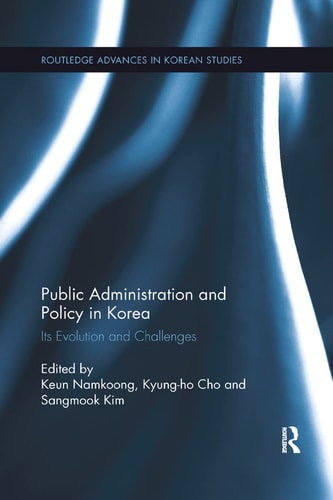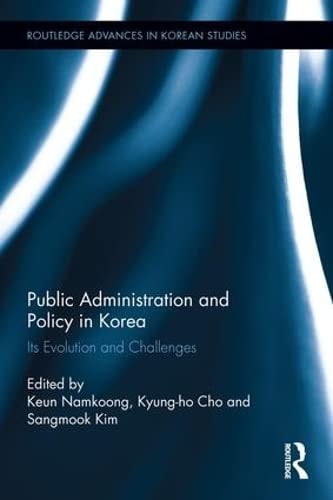
Public Administration and Policy in Korea: Its Evolution and Challenges
0
0
As an Amazon Associate and affiliate partner, Menrva Books earns from qualifying purchases. Learn more
Author Description
The present Korean public administration and policy system has shown very significant differences compared to the system in 1970s. This book provides a comprehensive and holistic view on the development of Korean public policy and administration. Instead of dichotomizing the policy and administration, this book integrates two fields to provide a more holistic view on the Korean public sector. The book also attempts to overcome simplified explanations on the developmental state theory. The book aims to explain who the key actors are during the post-democratization period, how the administrative systems reform, and what kinds of social problems are transformed into public policies. This explanation suggests that the role of government shifts from a dominant actor to an actor within a complex network governance. This book will be a useful reference to anyone who wishes to learn more about the experience of the Korean development and the role of administration and policy.
Menrva's Summary
THE THESIS
This book investigates the evolution and challenges of public administration and policy in Korea, particularly focusing on the transformations since the 1970s. It offers a comprehensive and integrated view of the Korean public sector, merging the fields of policy and administration rather than treating them separately. The authors aim to provide a nuanced explanation of Korea's developmental state, moving beyond simplified theories. Key actors, administrative reforms, and the translation of social problems into public policies in the post-democratization era are examined, highlighting a shift in government's role towards network governance.
THE SCOPE MAP
- Analysis of the evolution of Korean public administration and policy from the 1970s to the present.
- Integration of policy and administration to provide a holistic view of the Korean public sector.
- Critique and expansion of simplified explanations of the developmental state theory.
- Identification of key actors and their roles in the post-democratization period.
- Examination of administrative system reforms and their impact.
- Exploration of how social problems are transformed into public policies.
- Discussion on the shift from a dominant government role to network governance.
THE AUTHORITY PERSPECTIVE
This book is presented as a useful reference for understanding the Korean development experience and the role of its administration and policy. The authors' approach integrates policy and administration, offering a holistic view of the Korean public sector and attempting to provide more complex explanations of the developmental state theory. It focuses on the post-democratization period, examining key actors, reforms, and the transformation of social issues into policy. The work suggests a significant shift in the government's role towards network governance.
Page Count:
313
Publication Date:
2018-01-01
Publisher:
Taylor & Francis Group
ISBN-10:
0415787890
ISBN-13:
9780415787895
Politics
Non-Fiction
History
Korean Studies
Developmental State Theory
Policy Studies
Public Administration
Governance
Community Tags
Similar Books