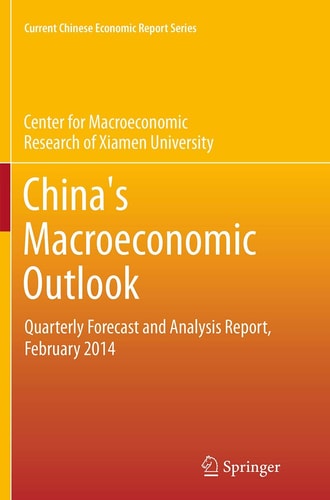
China’s Macroeconomic Outlook Quarterly Forecast and Analysis Report, February 2014
0
0
As an Amazon Associate and affiliate partner, Menrva Books earns from qualifying purchases. Learn more
Author Description
This book provides key insights into how to control local government debts and optimize the makeup of debts in China. The rapid growth of investment in infrastructure on the part of local governments has offset the slowdown of investment growth in manufacturing and real estate and maintained the growth rate of 7.7% in 2013. However, local governments’ debts have accumulated, which increases the risk of debt default and threatens the stability of China’s financial system. The research suggests that increasing the proportion of issuing bonds in total debts would be the first step toward eliminating the debt risk. Second, the Chinese government should play its part; and lastly, the government should relinquish its administrative control and monopoly in order to allow the service industry to further develop.
Menrva's Summary
THE THESIS
This report analyzes the critical issue of local government debt in China and proposes strategies for its management and mitigation. The rapid expansion of infrastructure investment by local governments in 2013 successfully counteracted a slowdown in manufacturing and real estate, maintaining an overall growth rate of 7.7%. However, this growth has led to a significant accumulation of local government debts, posing a substantial risk of default and threatening the stability of China's financial system. The research presented herein offers a multi-pronged approach to address this challenge, focusing on fiscal policy adjustments and market liberalization.
THE SCOPE MAP
- Analysis of local government debt accumulation and its impact on China's financial system.
- Strategies for controlling local government debts.
- Recommendations for optimizing the composition of local government debts.
- The role of issuing bonds in mitigating debt default risks.
- Government intervention and its effectiveness in debt management.
- The impact of administrative control and monopoly on the service industry's development.
- Forecast and analysis of China's macroeconomic outlook.
THE AUTHORITY PERSPECTIVE
This report is a technical analysis focused on China's macroeconomic policies, specifically addressing the pressing issue of local government debt. The research offers concrete suggestions for fiscal reform, including increasing the proportion of bond issuance and reducing government administrative control over certain sectors. The analysis is grounded in the economic conditions of 2013 and early 2014, providing a snapshot of the challenges and proposed solutions during that period. It is likely intended for policymakers, economists, and financial analysts interested in the Chinese economy.
Page Count:
66
Publication Date:
2016-10-06
Publisher:
Springer Berlin Heidelberg
ISBN-10:
366252628X
ISBN-13:
9783662526286
Politics
Economics
Non-Fiction
Business
Community Tags
Similar Books