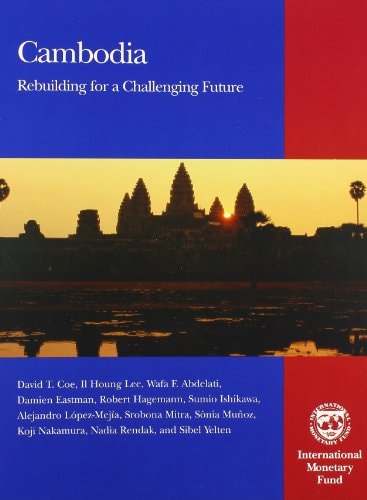
Cambodia: Rebuilding for a Challenging Future
0
0
As an Amazon Associate and affiliate partner, Menrva Books earns from qualifying purchases. Learn more
Author Description
Cambodia's reconstruction and reform efforts have spanned almost 25 years following the Khmer Rouge period that ended in 1979. Economic reforms began in earnest in the early 1990s, but reform efforts were beset by ongoing internal tensions and civil unrest. Although external factors, including sizeable aid inflows and a trade agreement with the United States, helped boost growth in the last decade, the country remains one of the poorest in the region. The current coalition government has announced a strategy aimed at revitalizing economic reforms, and in 2004 Cambodia formally joined the World Trade Organization. But elimination of the garment quota system under the Agreement on Textiles and Clothing is exposing an underlying deterioration in competitiveness, which, coupled with slow growth in the agriculture sector and other structural obstacles to private sector growth, have resulted in a medium-term outlook that remains uncertain.
Menrva's Summary
THE THESIS
The book examines Cambodia's complex path toward recovery and modernization following decades of conflict and instability. It details the nation's economic reforms initiated in the early 1990s, highlighting the challenges posed by internal tensions and civil unrest. Despite external support and trade agreements, Cambodia continues to face significant economic hurdles, including a recent exposure of declining competitiveness and structural obstacles to private sector growth. The analysis considers the implications of joining the World Trade Organization against a backdrop of an uncertain medium-term economic outlook.
THE SCOPE MAP
- An overview of Cambodia's reconstruction and reform efforts since 1979.
- Analysis of economic reforms initiated in the early 1990s and their challenges.
- Discussion of external factors such as aid inflows and trade agreements.
- Assessment of Cambodia's economic competitiveness in light of the elimination of the garment quota system.
- Examination of structural obstacles to private sector growth.
- Evaluation of the medium-term economic outlook for Cambodia.
THE AUTHORITY PERSPECTIVE
The book provides a detailed analysis of Cambodia's post-Khmer Rouge economic and political landscape. It highlights the persistent challenges faced by the nation in its efforts to rebuild and reform, particularly in the context of global economic shifts. The author's examination of competitiveness issues and structural obstacles offers a critical perspective on the country's development trajectory. The work is positioned as an important resource for understanding the complexities of post-conflict nation-building and economic development in Southeast Asia.
Page Count:
90
Publication Date:
2006-01-01
Publisher:
Intl Monetary Fund
ISBN-10:
1589064445
ISBN-13:
9781589064447
Politics
Economics
History
Non-Fiction
Community Tags
Similar Books