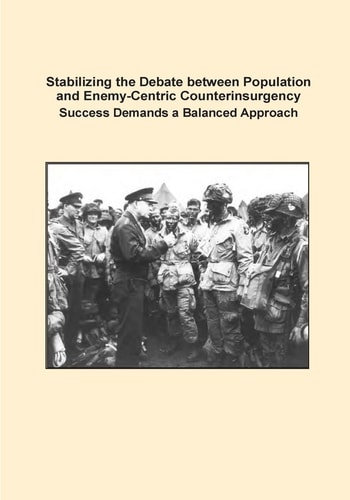
Stabilizing the Debate Between Population and Enemy-Centric Counterinsurgency: Success Demands a Balanced Approach
0
0
As an Amazon Associate and affiliate partner, Menrva Books earns from qualifying purchases. Learn more
Author Description
This thesis contends the debate on whether to embrace a population-centric or enemy-centric counterinsurgency strategy in Afghanistan detracts focus from building a balanced approach, customized for the human and political landscape in each area of operation (AO). The debate should be finally resolved since each strategic axis represents a crucial portion of the ideal hybrid approach, which necessarily looks different from one AO to the next. Each extreme, whether focusing all effort on killing and capturing the enemy (enemy-centric) or partnering with and protecting the population from the enemy (population-centric) is unique to local conditions on the ground. "Centric" means to focus efforts only in one direction or the other. The "centric" banners must be dropped and the US should maintain a balanced approach, integrating both strategies and freeing commanders to use every available resource across the lines of effort in the concentrations he deems appropriate and conducive to his specific AO. The US is fighting a counterinsurgency that necessitates both the destruction of the enemy and the nurturing of the population. Counterinsurgency, as another form of warfare, must utilize all elements of national power to achieve the desired outcome. The consensus from a comprehensive study of multiple counterinsurgency models indicates that utilizing all available resources to achieve a balanced approach and providing the autonomy our commanders require to achieve success in their AOs is the most effective way to deal with counterinsurgencies now and in the future.
Menrva's Summary
THE THESIS
This thesis argues that the prevailing debate over population-centric versus enemy-centric counterinsurgency strategies distracts from the necessity of a balanced, adaptable approach. The author, a Colonel in the U.S. Army Command and General Staff College, contends that both population-centric (partnering with and protecting the population) and enemy-centric (killing and capturing the enemy) strategies are vital components of an ideal hybrid approach. The effectiveness of each strategy is contingent on local conditions, necessitating that the focus shift from rigid adherence to one extreme to a flexible integration of both. The argument is grounded in a comprehensive study of multiple counterinsurgency models, emphasizing the need for commanders to have the autonomy to integrate all elements of national power tailored to specific areas of operation.
THE SCOPE MAP
- Analysis of the population-centric counterinsurgency approach.
- Analysis of the enemy-centric counterinsurgency approach.
- The necessity of a hybrid, balanced counterinsurgency strategy.
- Case studies or examples from Afghanistan.
- The role of local conditions in shaping counterinsurgency strategy.
- Integration of all elements of national power in counterinsurgency.
- Autonomy for commanders in tailoring strategies to specific Areas of Operation (AO).
THE AUTHORITY PERSPECTIVE
This work, originating from the U.S. Army Command and General Staff College, presents a strategic analysis of counterinsurgency doctrine. It advocates for a balanced approach, integrating both population-centric and enemy-centric methodologies, a perspective likely to resonate with military strategists and policymakers involved in asymmetric warfare. The thesis emphasizes adaptability and commander autonomy, suggesting a pragmatic framework for future conflict resolution.
Page Count:
140
Publication Date:
2014-08-01
Publisher:
CreateSpace Independent Publishing Platform
ISBN-10:
150070556X
ISBN-13:
9781500705565
Politics
Non-Fiction
History
International relations
Afghanistan
Counterinsurgency
Military Strategy
Community Tags
Similar Books