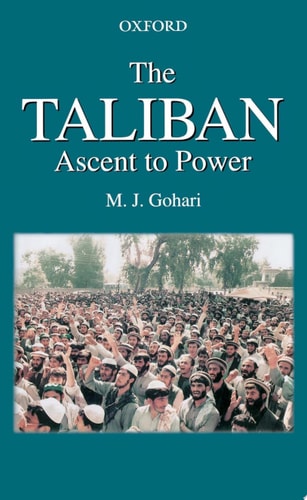
The Taliban: Ascent to Power
0
0
As an Amazon Associate and affiliate partner, Menrva Books earns from qualifying purchases. Learn more
Author Description
For many Westerners, Islam appears to contradict democratic values, yet these perceptions result from the characterization of certain Islamic movements as "radical" or "fundamentalist." This book describes one such movement that has been condemned in the West: the Taliban in Afghanistan. Shedding light on their doctrine, it analyzes the rise of the Taliban and their effect on Afghan society, their impact on Afghanistan's neighbors, and their troubled relationship with the United Nations. It concludes with a short chapter on the life and views of Bin Laden, an elusive radical who has famously and brutally translated his beliefs into action.
Menrva's Summary
THE THESIS
This book investigates the origins, ideological foundations, and geopolitical consequences of the Taliban movement in Afghanistan. M. J. Gohari examines the rise of this group within the context of Afghan social structures and regional instability. By analyzing their doctrine and interactions with international bodies like the United Nations, the author provides a framework for understanding how the movement challenged Western perceptions of Islamic governance and democratic values.
THE SCOPE MAP
What You Will Find
- Historical analysis of the Taliban's emergence in post-Soviet Afghanistan
- Examination of the movement's theological and political doctrine
- Assessment of the impact on Afghan social structures and regional neighbors
- Investigation into the relationship between the Taliban and Osama Bin Laden
THE AUTHORITY PERSPECTIVE
Experts identify this work as a foundational text for understanding the early political trajectory of the Taliban in the late 20th century. Readers frequently note the accessible yet analytical tone, which provides necessary context for the group's subsequent influence on global security.
Page Count:
172
Publication Date:
2001-09-27
Publisher:
Oxford University Press
ISBN-10:
0195795601
ISBN-13:
9780195795608
History
Afghanistan
Islam And Politics
International relations
Taliban
Politics & Government
Middle East
Islam And State
Community Tags
Similar Books