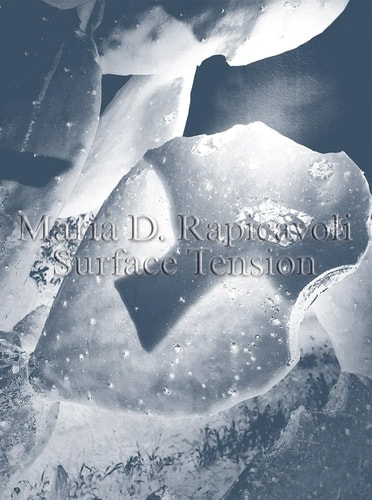
Maria D. Rapicavoli: Surface Tension
0
0
As an Amazon Associate and affiliate partner, Menrva Books earns from qualifying purchases. Learn more
Author Description
Maria D. Rapicavoli’s The Other: A Familiar Story (2020) takes as its starting point the personal narrative of an unnamed member of the artist’s extended family who was forced to leave her children in Catania, Italy, and follow her husband to Lawrence, Massachusetts. This relative was coerced into marriage by a man who raped her. This confounding story at the center of The Other embodies multiple, intertwined forms of oppression that are integral and widespread in the history of humanity. These kinds of transgressions are often unacknowledged, even as they play out around us. Beginning with the first line of the voice-over - 'Some stories never end' - the course of the protagonist’s emotional landscape is mapped out in myriad spaces that allude to the uncertainties of her experiences of migration. Within the script, ‘Some stories never end’ is followed by ‘not even when you die,’ pointing to the epigenetic nature of generational trauma. Rapicavoli shows us how the unresolved effects of the protagonist’s separation from her children, the labor conditions she endured as a factory worker, and the suffocating and inescapable relationship with her husband still reverberate more than a hundred years later
Menrva's Summary
THE THESIS
This book examines the intersection of personal narrative, generational trauma, and artistic expression through the lens of Maria D. Rapicavoli's work. The text delves into Rapicavoli's 2020 piece, 'The Other: A Familiar Story,' which centers on an unnamed family member forced to leave her children and follow her husband to a new country, enduring coercion and abuse. The narrative explores the profound and often unacknowledged forms of oppression embedded in this personal history, linking it to broader themes of migration, epigenetic trauma, and the enduring impact of unresolved experiences across generations. The book uses the artist's work to map the emotional landscape of the protagonist and the lingering effects of separation, labor, and suffocating relationships.
THE SCOPE MAP
- Analysis of Maria D. Rapicavoli's artistic project 'The Other: A Familiar Story'.
- Exploration of the personal narrative of an unnamed relative of the artist.
- Examination of themes of forced migration and separation from children.
- Discussion of coerced marriage and enduring abusive relationships.
- Investigation into generational trauma and its epigenetic nature.
- Analysis of the protagonist's experiences as a factory worker.
- Mapping of the protagonist's emotional landscape through various spaces.
- Connection between unresolved personal experiences and their reverberations over time.
THE AUTHORITY PERSPECTIVE
The publisher's description frames this book as a profound exploration of intertwined oppressions and generational trauma, using Maria D. Rapicavoli's artwork as a focal point. It highlights the narrative's grounding in a specific, harrowing family history to discuss widespread human experiences of coercion and suffering. The text suggests that the book offers a deep dive into the psychological and emotional consequences of migration and abuse, emphasizing how these stories, though often unacknowledged, continue to resonate. The publisher's framing indicates an intent to connect the personal to the universal, exploring the enduring impact of trauma across generations.
Page Count:
96
Publication Date:
2022-10-18
Publisher:
Mousse Publishing
ISBN-10:
8867494872
ISBN-13:
9788867494873
Non-Fiction
Memoir
Art
Contemporary
Biography
Community Tags
Similar Books