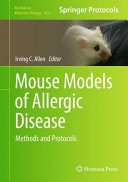
Mouse Models of Allergic Disease: Methods and Protocols
0
0
As an Amazon Associate and affiliate partner, Menrva Books earns from qualifying purchases. Learn more
Author Description
Over the last half century, a dramatic increase in allergic diseases has been observed throughout industrialized nations, which has resulted in significant worldwide socio-economic challenges. In Mouse Models of Allergic Disease: Methods and Protocols, a wide range of expert contributors provide detailed protocols for the design and execution of experiments to thoroughly analyze critical elements associated with a diverse range of allergic diseases, all through the lens of mouse models that accurately recapitulate clinically relevant aspects of the respective human disease. The volume opens with a section featuring techniques essential for effective ex vivo cell isolation and evaluation of specific cell types relevant to a diverse range of allergic diseases, and the book then moves on to cover in vivo protocols to evaluate prevalent mouse models of human allergic diseases, including mouse models of systemic anaphylaxis, contact hypersensitivity, allergic rhinitis, and asthma, as well as a collection of chapters on in vivo and ex vivo protocols used to assess indirect mediators of allergic diseases, such as the nervous system, non-hematopoietic cells, and the composition of the gut microbiome. Written in the highly successful Methods in Molecular Biology series, chapters include introductions to their respective topics, lists of the necessary materials and reagents, step-by-step, readily reproducible laboratory protocols, and tips on troubleshooting and avoiding known pitfalls. Timely and authoritative, Mouse Models of Allergic Disease: Methods and Protocols serves as an essential collection of protocols that allow both novice and expert researchers the ability to accurately develop, evaluate, and characterize the mechanisms associated with these disorders.
Menrva's Summary
THE THESIS
This volume addresses the significant global challenge posed by the dramatic increase in allergic diseases by providing detailed experimental protocols using mouse models. The book compiles methods for analyzing critical elements of diverse allergic diseases, focusing on mouse models that accurately reflect human conditions. It begins with techniques for ex vivo cell isolation and evaluation, then progresses to in vivo protocols for systemic anaphylaxis, contact hypersensitivity, allergic rhinitis, and asthma. Further chapters explore indirect mediators, including the nervous system, non-hematopoietic cells, and the gut microbiome.
THE SCOPE MAP
- Techniques for effective ex vivo cell isolation and evaluation of specific cell types relevant to allergic diseases.
- In vivo protocols to evaluate prevalent mouse models of human allergic diseases.
- Specific mouse models covered include systemic anaphylaxis, contact hypersensitivity, allergic rhinitis, and asthma.
- Chapters on in vivo and ex vivo protocols to assess indirect mediators of allergic diseases.
- Assessment of the nervous system's role in allergic diseases.
- Evaluation of non-hematopoietic cells in allergic disease mechanisms.
- Protocols for analyzing the composition of the gut microbiome in relation to allergies.
- Includes introductions, materials lists, step-by-step protocols, and troubleshooting tips.
THE AUTHORITY PERSPECTIVE
As part of the Methods in Molecular Biology series, this book is structured to provide researchers with reproducible laboratory protocols. The content is designed to be useful for both novice and expert researchers seeking to develop, evaluate, and characterize the mechanisms of allergic disorders. The collection of methods aims to facilitate a thorough analysis of critical elements associated with a diverse range of allergic diseases. The protocols are presented with an emphasis on accuracy and the ability to recapitulate clinically relevant aspects of human diseases.
Page Count:
326
Publication Date:
2013-01-01
Publisher:
Humana Press
ISBN-10:
162703496X
ISBN-13:
9781627034968
Non-Fiction
Science
Immunology
Laboratory Protocols
Allergy
Medicine
Research
Community Tags
Similar Books