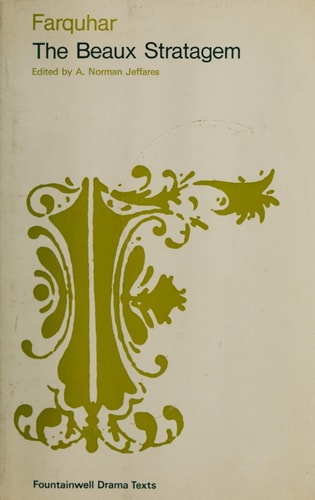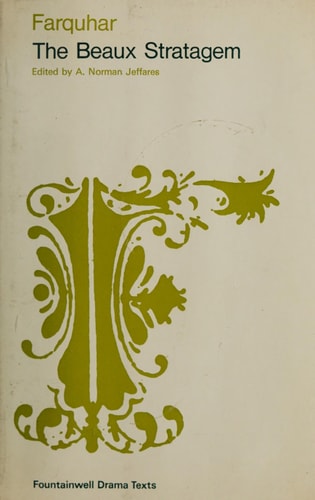
The beaux stratagem; (Fountainwell drama texts)
0
0
As an Amazon Associate and affiliate partner, Menrva Books earns from qualifying purchases. Learn more
Author Description
Five-act comedy by George Farquhar, produced and published in 1707. Farquhar finished the play on his deathbed and died on the night of its third performance. The story concerns Archer and Aimwell, two penniless antic rakes from London who decide that one of them must wed a wealthy lady. Aimwell therefore courts Dorinda, the daughter of wealthy Lady Bountiful; meanwhile Archer, who is posing as Aimwell's servant, and Lady Bountiful's daughter-in-law, Mrs. Sullen, fall in love. In the course of events, Aimwell and Archer manage to foil robbers, thereby becoming heroes. Eventually Aimwell inherits the family estate, Mrs. Sullen separates from her brutish drunkard of a husband, and the play ends happily. In addition to its lively comedy, The Beaux' Stratagem presents a bold argument for divorce, which is voiced by Mrs. Sullen. Lady Bountiful's name became a byword for a rich, generous, and somewhat credulous philanthropist. -- The Merriam-Webster Encyclopedia of Literature
Menrva's Summary
THE PULSE
Two impoverished London rakes, Archer and Aimwell, arrive in the countryside with a calculated scheme to secure their fortunes through strategic marriages. The protagonists navigate the social hierarchies of rural England, assuming false identities to infiltrate the household of the wealthy Lady Bountiful. Their objective is complicated by the genuine emotional entanglements they form with the local women, forcing them to choose between their original mercenary motives and newfound personal integrity. The narrative unfolds through a series of witty exchanges and farcical misunderstandings, typical of the Restoration comedy tradition.
INSIDE THE PAGES
- Five-act structure characteristic of eighteenth-century drama
- Use of disguise and mistaken identity as primary plot drivers
- Sharp, satirical dialogue targeting social conventions and marriage
- Exploration of the legal and moral complexities of divorce
- Archetypal characters including the 'rake' and the 'philanthropist'
- Integration of subplots involving criminal elements and local gentry
- Fast-paced comedic timing and situational irony
- Thematic focus on the intersection of financial necessity and romantic desire
THE COLLECTIVE ECHO
Readers and critics frequently highlight the play's enduring wit and its surprisingly progressive stance on the necessity of divorce for unhappy spouses. Discussion often centers on the contrast between the cynical, mercenary nature of the protagonists' initial plan and the genuine human connections they eventually form. Scholars note that the work serves as a significant bridge between the bawdy Restoration style and the more sentimental drama that followed. The character of Mrs. Sullen is often cited as a standout for her articulate critique of the domestic constraints placed upon women during the period. Overall, the play is regarded as a sophisticated example of late-period comedy that balances humor with social commentary.
Page Count:
126
Publication Date:
1972-01-01
Publisher:
Oliver and Boyd
ISBN-10:
0050015737
ISBN-13:
9780050015735
Drama
Restoration Comedy
Foreign Study
Reference
Dramas & Plays
Classic Literature
Comedy
Plays
Community Tags
Similar Books