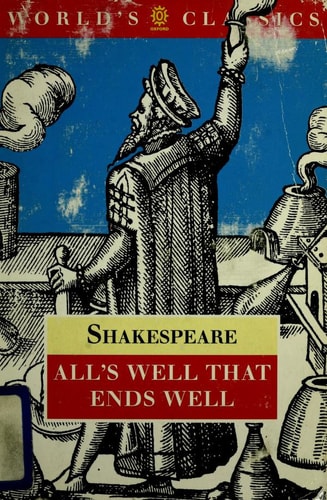
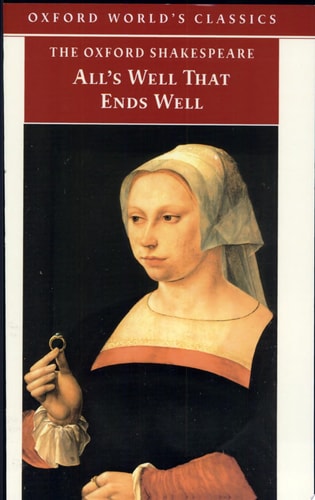
All's Well That Ends Well
0
0
As an Amazon Associate and affiliate partner, Menrva Books earns from qualifying purchases. Learn more
Author Description
Usually classified as a "problem comedy," All's Well that Ends Well is a psychologically disturbing presentation of an aggressive, designing woman and a reluctant husband wooed by trickery. In her introduction Susan Snyder makes the play's clashing ideologies of class and gender newlyaccessible, and offers a fully reconsidered, annotated text for both readers and actors.
Menrva's Summary
THE PULSE
Helena, a physician's daughter, maneuvers through social and personal obstacles to secure the hand of the reluctant Count Bertram. Helena utilizes her medical knowledge and strategic deception to force a marriage with Bertram, a nobleman who views her as a social inferior. The narrative follows their clashing desires as Bertram flees to war to escape his domestic obligations, leaving Helena to navigate the rigid class structures and gender expectations of the period. The play operates through a series of complex social maneuvers and moral dilemmas, presented in the traditional five-act structure of Elizabethan drama.
INSIDE THE PAGES
- Exploration of the 'problem comedy' genre
- Examination of class-based social mobility
- Use of bed trick plot device
- Analysis of gender dynamics in marriage
- Focus on psychological character motivation
- Inclusion of annotated text for performance
- Scholarly introduction by Susan Snyder
- Critical commentary on ideological conflict
THE COLLECTIVE ECHO
Discussion often centers on the polarizing nature of the protagonist's actions and the ambiguous resolution of the central marriage. Readers frequently highlight the uncomfortable power dynamics that persist throughout the narrative, which challenge traditional comedic tropes. Critics often examine how the play subverts expectations of romance by focusing on the transactional aspects of the union. The work is frequently analyzed for its psychological depth and the moral complexity of its central figures. Many readers find the play's tone difficult to categorize, leading to ongoing debates regarding its classification as a comedy.
Page Count:
256
Publication Date:
1994-04-07
Publisher:
Oxford University Press
ISBN-10:
0192814591
ISBN-13:
9780192814593
Drama
Comedy
Plays
Classic Literature
Dramatic works
Renaissance Theater
Community Tags
Other Editions(4)

Similar Books