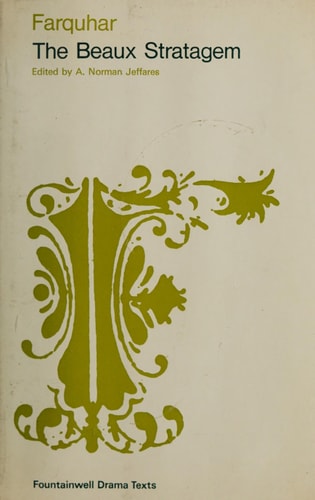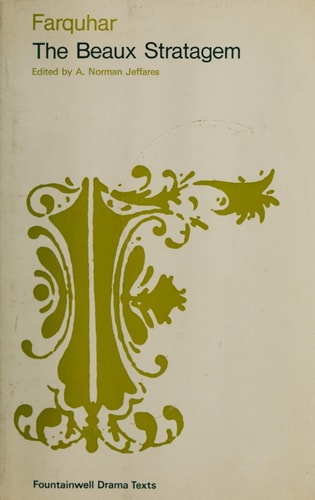
The beaux stratagem
0
0
As an Amazon Associate and affiliate partner, Menrva Books earns from qualifying purchases. Learn more
Author Description
In this new edition, The Beaux' Stratagem is seen as a traditional work, combining characteristics of the Restoration comedy of manners with those of the more conventionally moral comedy that followed. Mr. Fifer discusses the numerous alterations made in the text during the century, many of which eliminated racy dialogue or diminished the importance of the marriage-divorce theme. Farquhar's views on divorce were influenced by Milton; he is also concerned here with the conflict between virtue and vice, and with the importance of money and its influence on personal freedom. Based on a collation of eight copies of the first quarto, this edition includes extensive discussion of text and stage history.
Menrva's Summary
THE PULSE
Two impoverished gentlemen arrive in a provincial town with a calculated scheme to marry into wealth, only to find their own desires complicated by the local inhabitants. Aiming to restore their fortunes through strategic matrimony, the protagonists navigate a social landscape defined by rigid class expectations and financial necessity. They encounter a cast of characters whose own marital dissatisfactions and personal ambitions create a series of comedic misunderstandings. The narrative unfolds through sharp dialogue and theatrical artifice, highlighting the tension between individual autonomy and societal constraints.
INSIDE THE PAGES
- Satirical examination of 18th-century marriage customs
- Use of the comedy of manners framework
- Exploration of the intersection between money and personal freedom
- Complex character dynamics involving social status
- Witty, fast-paced dialogue characteristic of Restoration-era drama
- Thematic focus on the conflict between virtue and vice
- Integration of Miltonic influences regarding divorce
- Structured as a multi-act stage play
THE COLLECTIVE ECHO
Discussion often centers on the play's transition between the bawdy Restoration style and the emerging moralistic tone of the period. Readers frequently highlight the sharpness of Farquhar's wit and his cynical yet insightful commentary on the economic realities of marriage. Critics often examine the play's historical significance in the evolution of English comedy and its specific treatment of divorce laws. The work is widely regarded as a pivotal example of late Restoration drama that balances farcical elements with genuine social critique. Scholars continue to analyze how the text reflects the author's personal views on the constraints placed upon individuals by contemporary legal and social institutions.
Page Count:
126
Publication Date:
1972-01-01
Publisher:
Oliver and Boyd
ISBN-10:
0050016911
ISBN-13:
9780050016916
Drama
Dramas & Plays
Reference
Classic Literature
Plays
Comedy
Foreign Study
Restoration Comedy
Community Tags
Other Editions(2)

Similar Books