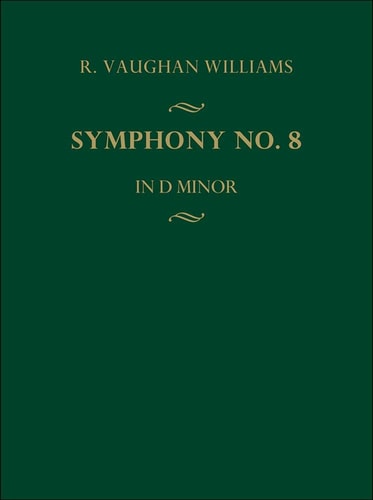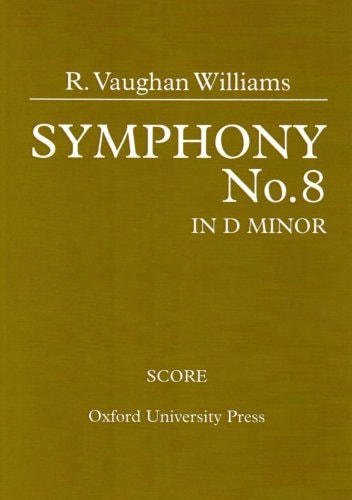
Symphony No. 8: Study Score
0
0
As an Amazon Associate and affiliate partner, Menrva Books earns from qualifying purchases. Learn more
Author Description
Vaughan Williams’s Symphony No. 8 was composed between 1953 and 1955. It was the first of his symphonies which Vaughan Williams numbered. Sir John Barbirolli conducted the premiere of the piece on 2 May 1956 with the Halle Orchestra. The Eighth Symphony is the shortest of Vaughan Williams’s symphonies, yet is remarkably inventive, especially in the composer’s experiments in sonority. Not only does he use a much-expanded percussion section, including “all the ’phones and ’spiels known to the composer” (as well as three tuned gongs, the same as were used in Puccini’s Turandot), but the two central movements use only the winds and strings section respectively. Among his symphonies the Fourth Symphony is the only other one to end loudly (the others all have quiet conclusions, often with the Vaughan Williams “fingerprint” niente). The work is in four movements: 1. Fantasia (Variazioni senza tema) (variations without a theme) - the composer also referred to this as being “seven variations in search of a theme.” Even though the variation structure predominates the acute listener may notice elements of sonata form. 2. Scherzo alla marcia (for wind instruments only) - this short, quick march (with trio) is somewhat akin to that of a British military band. The trio section revisits Vaughan Williams’s “pastoral” style. 3. Cavatina (for bowed strings only) - This movement, in a five-part rondo form, has a meditative character and includes important solo passages for violin and cello. The main theme bears a clear resemblance, which Vaughan Williams acknowledged, to the “Passion” chorale (O sacred head, now wounded) that Bach used several times in the St. Matthew Passion and elsewhere. 4. Toccata - the finale (entitled Toccata to indicate its virtuoso nature) contains much exuberant writing for the percussion section. Harmonically, the movement seems uncertain of whether to be in D minor or D major.
Menrva's Summary
THE THESIS
This study score investigates the structural and sonorous innovations of Ralph Vaughan Williams’s Symphony No. 8, composed between 1953 and 1955. The text provides a technical breakdown of the composer's experimental approach to orchestration, specifically his expanded use of percussion and the unique instrumental constraints applied to the central movements. By analyzing the four-movement structure, the work serves as a formal guide to understanding the composer's departure from his traditional symphonic conclusions.
THE SCOPE MAP
What You Will Find
- Detailed movement-by-movement analysis including Fantasia, Scherzo alla marcia, Cavatina, and Toccata.
- Technical documentation of the expanded percussion section and specific instrumentation requirements.
- Historical context regarding the 1956 premiere conducted by Sir John Barbirolli.
- Formal analysis of thematic variations, rondo structures, and harmonic ambiguity.
THE AUTHORITY PERSPECTIVE
Musicologists and conductors frequently cite this score as a primary resource for understanding Vaughan Williams's late-career experimentation with timbre and sonority. Experts highlight the text as a foundational reference for those studying the specific orchestration techniques employed in the composer's final symphonic works.
Page Count:
96
Publication Date:
1969-03-31
Publisher:
Oxford University Press
ISBN-10:
0193694301
ISBN-13:
9780193694309
Music
New Used & Rental Textbooks
Music theory
Symphony
Musical Genres
Sheet Music
Community Tags
Similar Books