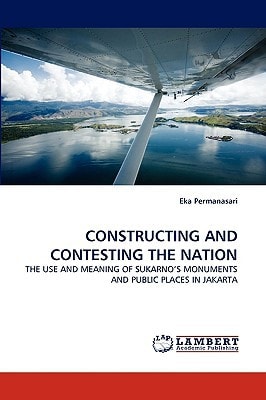
Constructing and Contesting the Nation
0
0
As an Amazon Associate and affiliate partner, Menrva Books earns from qualifying purchases. Learn more
Author Description
Architecture and urban design are often powerful expressions of political desires to support and legitimise specific regimes. While such concepts of national identity are established through a constellation of urban forms, national identity is always contested. Places may be used and interpreted in ways that differ from what is intended. This book examines the role of Sukarno s monuments and public places and how their meanings and uses have been transformed under successive regimes.
Menrva's Summary
THE THESIS
This book investigates how architecture and urban design serve as tools for constructing and contesting national identity, particularly through the lens of Sukarno's monuments and public spaces in Indonesia. It examines how political regimes utilize urban forms to legitimize their power and establish a sense of national belonging, while also acknowledging that these meanings are subject to contestation and reinterpretation by different groups and successive administrations. The analysis focuses on the transformation of meanings and uses of these spaces over time, reflecting shifts in political power and societal values.
THE SCOPE MAP
- Analysis of Sukarno's monuments and public places as expressions of political will.
- Exploration of how national identity is constructed through urban forms.
- Examination of the contested nature of national identity and its spatial manifestations.
- Case study of Indonesia, focusing on the role of architecture in nation-building.
- Investigation into the transformation of meanings and uses of public spaces under successive regimes.
- Discussion of the interplay between political desires and urban design.
THE AUTHORITY PERSPECTIVE
The book examines the complex relationship between architecture, urban design, and the formation of national identity, using Sukarno's Indonesia as a primary case study. It highlights how monuments and public spaces are not merely physical structures but are imbued with political meaning, serving to legitimize regimes while simultaneously being sites of contestation. The analysis suggests that the interpretation and use of these spaces evolve with changing political landscapes and societal values. This work offers a critical perspective on how national narratives are built and challenged through the built environment.
Page Count:
316
Publication Date:
2010-01-01
Publisher:
Lap Lambert Academic Publishing GmbH KG
ISBN-10:
3838352378
ISBN-13:
9783838352374
Architecture
History
Non-Fiction
National Identity
Urban Design
Community Tags
Similar Books