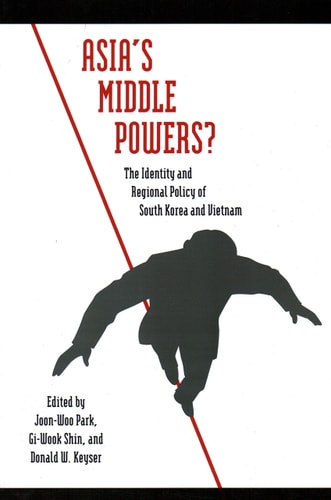
Asia's Middle Powers? The Identity and Regional Policy of South Korea and Vietnam
0
0
As an Amazon Associate and affiliate partner, Menrva Books earns from qualifying purchases. Learn more
Author Description
South Korea and Vietnam established diplomatic relations only twenty years ago. Today these former adversaries enjoy unexpectedly cordial and rapidly expanding bilateral ties. Leaders of the two nations--perceiving broadly shared interests and no fundamental conflicts--seek to leverage their subregional influence on behalf of common or complementary policy goals. Today they often profess a middle power identity as they explain their foreign policy in terms of such classical middle power goals as regional peace, integration, and common goods. Broadly similar in many respects, South Korea and Vietnam are nonetheless sufficiently different that a comparison can yield interesting insights--yet there is a dearth of systematic comparative work on the two. While holding a range of views on the contentious concepts of middle power and national identity, the contributors to Asia's Middle Powers? help readers, both academic and policy practitioners, to gain an enhanced appreciation of South Korea and Vietnam's regional behavior and international strategies.
Menrva's Summary
THE THESIS
This book investigates the evolving identities and regional policies of South Korea and Vietnam, two nations that have transformed from adversaries to cordial partners in recent decades. The contributors explore how both countries, despite their differences, increasingly identify as middle powers and articulate their foreign policies through goals such as regional peace, integration, and the pursuit of common goods. The work aims to provide academic and policy practitioners with a deeper understanding of their regional behavior and international strategies, particularly in light of their shared interests and expanding bilateral ties.
THE SCOPE MAP
- Analysis of the diplomatic and political relationship between South Korea and Vietnam.
- Exploration of the concept of 'middle power' identity in contemporary international relations.
- Examination of shared interests and complementary policy goals between the two nations.
- Comparative study of South Korea and Vietnam's regional behavior and international strategies.
- Discussion of national identity as a factor in foreign policy formulation.
- Insights for academics and policy practitioners on East Asian regional dynamics.
THE AUTHORITY PERSPECTIVE
The collection aims to bridge a gap in comparative scholarship on South Korea and Vietnam, offering insights into their shared interests and evolving foreign policy orientations. By examining their self-proclaimed middle power identities, the book provides a framework for understanding their regional strategies and contributions to common goods. The contributors engage with contentious concepts of middle power and national identity, seeking to enhance appreciation for the nuances of their bilateral relationship and broader regional impact. This comparative approach is designed to benefit both academic researchers and policy practitioners interested in East Asian international relations.
Page Count:
189
Publication Date:
2013-01-01
Publisher:
Walter H. Shorenstein Asia-Pacific Research Center
ISBN-10:
1931368325
ISBN-13:
9781931368322
History
Non-Fiction
Politics
International relations
Foreign Policy
National Identity
Asian Studies
Community Tags
Similar Books