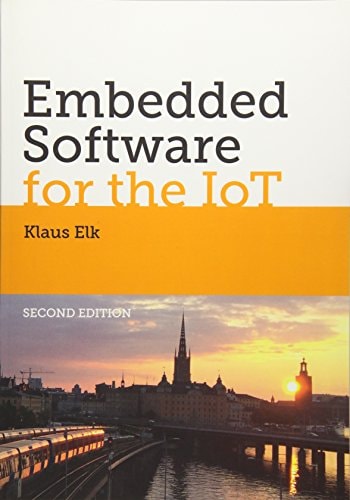
Embedded Software for the IoT: The Basics, Best Practices and Technologies
0
0
As an Amazon Associate and affiliate partner, Menrva Books earns from qualifying purchases. Learn more
Author Description
Details can be found on the web - when you know what to look for The aim of this book is to provide a framework of knowledge. This will help the reader understand the details in the technologies behind the devices used in the Internet of Things. This is done with a mixture of theory, examples and 'war-stories'. This book may be read by senior students. However, it is more likely to be read by developers with programming experience on Windows, Linux, or mobile phones, now faced with developing devices for the Internet of Things. Basic programming skills are thus assumed, whereas no other prior knowledge is needed. Based on many years of experience as developer, university-teacher and manager, the author's personal view on best practices in the embedded world is offered. Part I introduces the main features of Embedded Operating Systems and modern highly integrated CPU's. Thus, it builds the foundation for part II. Part II describes the authors view on best practices when working with embedded networking. Part III - on Internet Protocols, Digital Filters, Security and Statistical Process Control - is the main 'textbook'. It provides a lot of facts, backed up by examples. The many network cases are illustrated with the help of WireShark Captures. The 'Math-Near' chapters are focused on helping the reader understand the basics, without getting lost in formulas (although the main formulas are included for reference). One of the strongest features of this book is the many figures. They make the book inviting and helps the reader remember the knowledge provided. The improvements in this Second Edition has been on two frontiers: More content: New chapters on Security and Statistical Process Control are added - as well as more details in the other chapters. Improved Layout - especially the figures have been reworked to be more crisp and understandable. Many new figures are added - also in the 'ol
Menrva's Summary
THE THESIS
This book provides a foundational framework for understanding the technologies behind Internet of Things (IoT) devices. The author, drawing on extensive experience as a developer, teacher, and manager, offers a personal perspective on best practices in embedded systems. The content is structured to guide readers with existing programming experience (Windows, Linux, mobile) into the specific demands of IoT development, assuming basic programming skills but no prior specialized knowledge.
THE SCOPE MAP
- Introduction to the main features of Embedded Operating Systems.
- Explanation of modern highly integrated CPUs and their role in embedded systems.
- Best practices for embedded networking, as viewed by the author.
- Detailed coverage of Internet Protocols.
- Introduction to Digital Filters and their applications.
- Focus on Security aspects within embedded IoT systems.
- Explanation of Statistical Process Control in the context of IoT.
- Use of Wireshark captures to illustrate network cases and network protocols.
THE AUTHORITY PERSPECTIVE
The book is structured to serve as a comprehensive textbook, particularly for developers transitioning into the IoT space. Its approach combines theoretical knowledge with practical examples and anecdotal 'war-stories' from the author's extensive experience. The inclusion of numerous figures is highlighted as a key feature for aiding comprehension and retention, with the second edition specifically enhancing these visuals and adding new content on security and statistical process control. The author's personal insights into best practices offer a unique perspective for readers.
Page Count:
320
Publication Date:
2017-07-10
Publisher:
CreateSpace Independent Publishing Platform
ISBN-10:
1545526036
ISBN-13:
9781545526033
Non-Fiction
Science & Technology
Computer Engineering
Networking
Computer Science
Internet of things
Community Tags
Similar Books