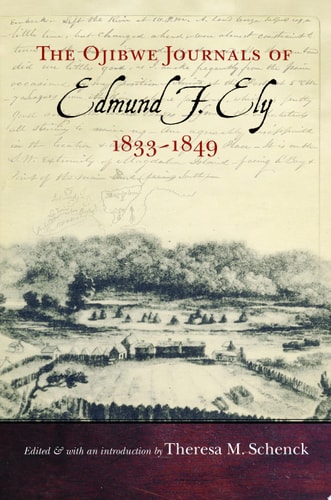
The Ojibwe Journals of Edmund F. Ely, 1833-1849
0
0
As an Amazon Associate and affiliate partner, Menrva Books earns from qualifying purchases. Learn more
Author Description
Twenty-four-year-old Edmund F. Ely, a divinity student from Albany, New York, gave up his preparation for the ministry in 1833 to become a missionary and teacher among the Ojibwe of Lake Superior. During the next sixteen years, Ely lived, taught, and preached among the Ojibwe, keeping a journal of his day-to-day experiences as well as recording ethnographic information about the Ojibwe. From recording his frustrations over the Ojibwe's rejection of Christianity to describing hunting and fishing techniques he learned from his Ojibwe neighbors, Ely’s unique and rich record provides unprecedented insight into early nineteenth-century Ojibwe life and Ojibwe-missionary relations. Theresa M. Schenck draws on a broad array of secondary sources to contextualize Ely’s journals for historians, anthropologists, linguists, literary scholars, and the Ojibwe themselves, highlighting the journals’ relevance and importance for understanding the Ojibwe of this era.
Menrva's Summary
THE THESIS
This collection documents the experiences of a nineteenth-century missionary among the Ojibwe people of Lake Superior. Edmund F. Ely, a divinity student, dedicated sixteen years of his life to teaching and preaching among the Ojibwe, meticulously recording his daily life and observations. His journals capture the complexities of early Ojibwe-missionary relations, detailing his struggles with the rejection of Christianity alongside his efforts to learn and document Ojibwe culture, including their hunting and fishing practices. The work offers a unique window into early nineteenth-century Ojibwe life through the lens of an outsider deeply embedded in their community.
THE SCOPE MAP
- Detailed personal journal entries from Edmund F. Ely spanning 1833-1849.
- Ethnographic observations on Ojibwe daily life, customs, and beliefs.
- Accounts of missionary efforts and interactions with the Ojibwe community.
- Insights into the challenges and successes of early missionary work.
- Descriptions of Ojibwe hunting, fishing, and subsistence techniques.
- Contextualization of the journals by editor Theresa M. Schenck for historical and anthropological understanding.
THE AUTHORITY PERSPECTIVE
This compilation of journals is presented as a significant historical and anthropological resource, offering unprecedented insight into early nineteenth-century Ojibwe life and the dynamics of missionary relations during that era. The editor's contextualization highlights the journals' relevance for historians, anthropologists, linguists, literary scholars, and the Ojibwe themselves, underscoring its value for understanding the period.
Page Count:
520
Publication Date:
2012-11-01
Publisher:
University of Nebraska Press
ISBN-10:
0803271581
ISBN-13:
9780803271586
Non-Fiction
History
Ethnography
Diaries
Anthropology
Community Tags
Similar Books














