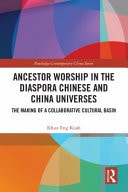
Ancestor Worship in the Diaspora Chinese and China Universes: The Making of a Collaborative Cultural Basin
0
0
As an Amazon Associate and affiliate partner, Menrva Books earns from qualifying purchases. Learn more
Author Description
Kuah explores the centrality of ancestors and ancestor worship of the Chinese in the Diaspora Chinese and China universes. Building on the original work and book on "Rebuilding the Ancestral Village: Singaporeans in China", this book goes beyond the premise of remaking the ancestral home. Ancestor worship and the ancestors, together with selected cultural practices, constitute an important aspect of the broad Chinese culture shared by these two groups of Chinese and leads to the making of a collaborative cultural basin. This book takes the audience on an ancestor worship journey to uncover the complexity of ancestors and ancestral souls crossing transnational spaces, their choices of ancestral soul homes, the significance of the lineage ancestral house and the engagement of women through food offering contesting patriarchy. It also explores the increasing role of the Mainland Chinese state in appropriating ancestor and ancestor worship as a cultural icon and during the Qingming festival as a socio-moral capital and cultural bridge to foster closer ties with the Diaspora Chinese in its attempt to bring them into its "Chinese civilizational polity". The book also takes the audience on a photographic journey to visually experience the various rituals and the vibrancy of the ritual performances conducted during the different stage from pre-communal to communal ancestor worship. An essential read for scholars of Chinese society and religion, Chinese migration and diaspora studies
Menrva's Summary
THE THESIS
This book investigates the pivotal role of ancestors and ancestor worship in shaping the shared cultural identity of Chinese communities across both diaspora and mainland China. Khun Eng Kuah-Pearce builds upon her previous work to examine how ancestor worship, alongside select cultural practices, forms a crucial element of broad Chinese culture, fostering a collaborative cultural basin. The study delves into the complexities of ancestors traversing transnational spaces, the significance of lineage ancestral houses, and the ways women engage with traditions like food offerings to contest patriarchal norms. It also scrutinizes the Chinese state's increasing appropriation of ancestor worship as a cultural icon and a tool for socio-moral capital, particularly during the Qingming festival, to strengthen ties with the diaspora and integrate them into a
THE SCOPE MAP
- Exploration of ancestor worship in diaspora Chinese and China universes.
- Analysis of how ancestor worship and selected cultural practices create a collaborative cultural basin.
- Examination of transnational movement of ancestors and ancestral souls.
- Significance of lineage ancestral houses.
- Role of women in contesting patriarchy through food offerings.
- The Mainland Chinese state's appropriation of ancestor worship and the Qingming festival.
- Visual journey through rituals and performances of ancestor worship.
- Discussion of the increasing role of the Mainland Chinese state in fostering ties with the Diaspora Chinese.
THE AUTHORITY PERSPECTIVE
This book is positioned as an essential read for scholars specializing in Chinese society and religion, as well as those in Chinese migration and diaspora studies. The existing description highlights its comprehensive approach, covering both the socio-cultural and political dimensions of ancestor worship. It suggests the work offers a nuanced understanding of how ancestral practices function across borders and within evolving political landscapes. The inclusion of a photographic journey indicates a visually rich engagement with the subject matter, complementing the academic analysis.
Page Count:
238
Publication Date:
2024-01-01
Publisher:
Routledge
ISBN-10:
1003441262
ISBN-13:
9781003441267
Non-Fiction
History
Religion
Anthropology
Sociology
Migration Studies
Community Tags
Similar Books