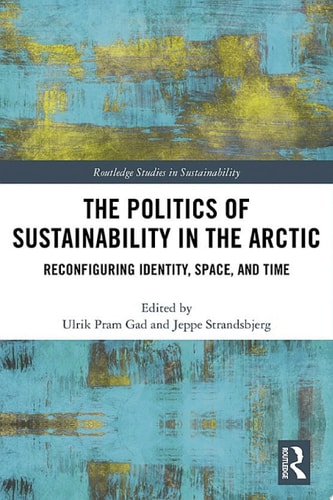
The Politics of Sustainability in the Arctic
0
0
As an Amazon Associate and affiliate partner, Menrva Books earns from qualifying purchases. Learn more
Author Description
The Politics of Sustainability in the Arctic argues that sustainability is a political concept because it defines and shapes competing visions of the future. In current Arctic affairs, prominent stakeholders agree that development needs to be sustainable, but there is no agreement over what it is that needs to be sustained. In original conservationist discourse, the environment was the sole referent object of sustainability; however, as sustainability discourses have expanded, the concept has been linked to an increasing number of referent objects, such as society, economy, culture, and identity. This book sets out a theoretical framework for understanding and analysing sustainability as a political concept, and provides a comprehensive empirical investigation of Arctic sustainability discourses. Presenting a range of case studies from Greenland, Norway, Canada, Russia, Iceland, and Alaska, the chapters in this volume analyse the concept of sustainability and how actors are employing and contesting this concept in specific regions within the Arctic. In doing so, the book demonstrates how sustainability is being given new meanings in the postcolonial Arctic and what the political implications are for postcoloniality, nature, and development more broadly. Beyond those interested in the Arctic, this book will also be of great value to students and scholars of sustainability, sustainable development, and identity and environmental politics.
Menrva's Summary
THE THESIS
The Politics of Sustainability in the Arctic investigates the contested meanings of sustainability within the Arctic region, arguing that the concept itself is inherently political due to competing visions of the future it embodies. While stakeholders universally acknowledge the need for sustainable development, this book reveals a profound lack of consensus on what precisely requires sustaining, moving beyond a singular focus on the environment to encompass society, economy, culture, and identity. Through a theoretical framework and empirical analysis of Arctic sustainability discourses, the authors explore how these meanings are being reshaped in the postcolonial Arctic and their broader implications.
THE SCOPE MAP
- A theoretical framework for analyzing sustainability as a political concept.
- Comprehensive empirical investigation of Arctic sustainability discourses.
- Case studies from Greenland, Norway, Canada, Russia, Iceland, and Alaska.
- Analysis of how actors employ and contest the concept of sustainability in specific Arctic regions.
- Examination of the political implications for postcoloniality, nature, and development.
THE AUTHORITY PERSPECTIVE
This book is positioned as a significant contribution to the understanding of sustainability in the Arctic, offering a novel theoretical framework and detailed empirical case studies. Its analysis of how sustainability is being redefined in the postcolonial Arctic is likely to be of interest to scholars and students of Arctic affairs, sustainability, environmental politics, and postcolonial studies. The book's focus on contested meanings and competing visions of the future provides a critical perspective on development and identity in the region. It aims to demonstrate the political nature of sustainability by examining its evolving applications and interpretations.
Page Count:
276
Publication Date:
2018-10-04
Publisher:
Taylor & Francis
ISBN-10:
1351031961
ISBN-13:
9781351031967
Non-Fiction
Science
Politics
Sustainability
Arctic Studies
Community Tags
Similar Books