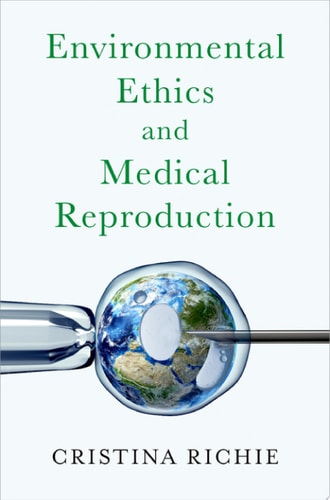
Environmental Ethics and Medical Reproduction
0
0
As an Amazon Associate and affiliate partner, Menrva Books earns from qualifying purchases. Learn more
Author Description
Carbon emissions of global health care activities comprise 4-5% of total world emissions, placing the health care industry on par with the food sector. The United States health care industry in particular expends an estimated 479 million metric tons of carbon dioxide per year -- nearly 8% of the country's total emissions. Health care impacts the environment through the use of resources needed to cure, treat, and prevent diseases; by extending lifespans; and by facilitating new births. In this book, Dr. Cristina Richie evaluates "medicalized reproduction" (MR) from an environmental perspective. From pre-conception gamete retrieval to in-vitro fertilization (IVF), to birthing suites, MR has an enormous carbon footprint. But, unlike other areas of high-carbon health care, such as organ transplantation or chemotherapy, medicalized reproduction does not treat, cure, or prevent disease. It is supported by an economized medical industry, and as such, is open for ethical scrutiny.Richie first situates MR within environmental ethics. Part I analyzes the numerous resources used for medical reproduction, emphasizing that MR is a voluntary lifestyle choice. Part II offers policy suggestions for sustainable MR, remaining sensitive to some individuals' desires to be parents coupled with the global push for medical and climate justice. The conclusion recognizes the obligation for environmental sustainability in all areas of life, including health care and family life.
Menrva's Summary
THE THESIS
This book investigates the environmental impact of medicalized reproduction (MR) and questions whether the carbon footprint of these procedures is ethically justifiable given that they do not treat, cure, or prevent disease. Dr. Cristina Richie, an expert in bioethics and environmental health, utilizes data regarding the carbon emissions of the global health care industry to frame her argument. She presents a critical analysis of the resource-intensive nature of IVF and other reproductive technologies, arguing that these practices represent a voluntary lifestyle choice rather than a medical necessity. The text proposes a framework for sustainable reproductive policy that balances individual desires for parenthood with the urgent need for global climate justice.
THE SCOPE MAP
What You Will Find
- Quantitative analysis of carbon emissions within the global and United States health care sectors.
- An ethical evaluation of medicalized reproduction procedures including gamete retrieval and in-vitro fertilization.
- A two-part structural argument covering resource consumption and proposed sustainable policy interventions.
- A synthesis of environmental ethics, medical justice, and reproductive rights.
THE AUTHORITY PERSPECTIVE
Experts in bioethics and environmental studies recognize this work as a significant contribution to the intersection of climate policy and medical practice. Readers frequently note the academic rigor of the text and its ability to challenge conventional views on the necessity of reproductive technologies in a warming world.
Page Count:
312
Publication Date:
2024-01-01
Publisher:
Oxford University Press
ISBN-10:
0197745180
ISBN-13:
9780197745182
Politics
Philosophy
Ethics & Morality
Public Health
Reproductive health
Sociology
Medical Ethics
Sustainability
Community Tags
Other Editions(2)
Similar Books