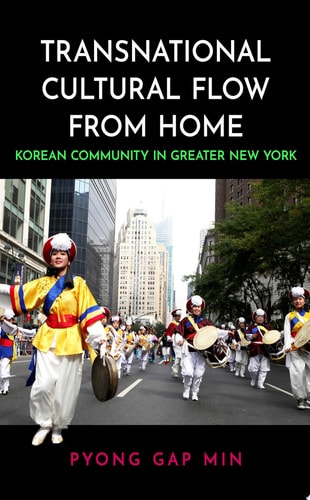
Transnational Cultural Flow from Home: Korean Community in Greater New York
0
0
As an Amazon Associate and affiliate partner, Menrva Books earns from qualifying purchases. Learn more
Author Description
When the first wave of post-1965 Korean immigrants arrived in the New York-New Jersey area in the early 1970s, they were reliant on retail and service businesses in the minority neighborhoods where they were. This caused ongoing conflicts with customers in black neighborhoods of New York City, with white suppliers at Hunts Point Produce Market, and with city government agencies that regulated small business activities. In addition, because of the times, Korean immigrants had very little contact with their homeland. Korean immigrants in the area were highly segregated from both the mainstream New York society and South Korea. However, after the 1990 Immigration Act, Korean immigrants with professional and managerial backgrounds have found occupations in the mainstream economy. Korean community leaders also engaged in active political campaigns to get Korean candidates elected as city council members and higher levels of legislative positions in the area. The Korean community's integration into mainstream society also increasingly developed stronger transnational ties to their homeland and spurred the inclusion of "everyday Korean life" in the NY-NJ area. Transnational Cultural Flow from Home examines New York Korean immigrants’ collective efforts to preserve their cultural traditions and cultural practices and their efforts to transmit and promote them to New Yorkers by focusing on the Korean cultural elements such as language, foods, cultural festivals, and traditional and contemporary performing arts. This publication was supported by the 2022 Korean Studies Grant Program of the Academy of Korean Studies (AKS-2022-P-009).
Menrva's Summary
THE THESIS
This book investigates the evolution of the Korean immigrant community in the New York-New Jersey area from initial isolation to increasing integration and transnational connection. The work details the early challenges faced by post-1965 immigrants, including economic conflicts and limited contact with their homeland, and contrasts this with the later integration into the mainstream economy and political landscape following the 1990 Immigration Act. It highlights the community's efforts to preserve and promote Korean cultural elements such as language, food, festivals, and performing arts within the New York metropolitan area.
THE SCOPE MAP
- Analysis of the early post-1965 Korean immigrant experience in the NY-NJ area.
- Examination of conflicts with existing communities and regulatory bodies.
- Discussion of the impact of the 1990 Immigration Act on professional integration.
- Exploration of Korean community leaders' political engagement and election campaigns.
- Focus on the development of stronger transnational ties to South Korea.
- Detailed look at the preservation and promotion of Korean cultural elements: language, food, festivals, and performing arts.
- Case study of 'everyday Korean life' in the NY-NJ area.
THE AUTHORITY PERSPECTIVE
The book details the historical trajectory of Korean immigrants in the New York-New Jersey region, charting their path from initial segregation and conflict to eventual integration into mainstream society and the strengthening of transnational ties. It emphasizes the community's active role in preserving and disseminating Korean culture through various means, including language, cuisine, festivals, and the arts. The research is supported by the 2022 Korean Studies Grant Program, indicating academic backing for its scholarly approach. The work appears to offer a comprehensive look at the socio-cultural dynamics of a significant immigrant group within a major metropolitan area.
Page Count:
223
Publication Date:
2022-12-09
Publisher:
Rutgers University Press
ISBN-10:
1978827148
ISBN-13:
9781978827141
Politics
History
Non-Fiction
Community Studies
Immigration
Sociology
Asian Studies
Community Tags
Similar Books