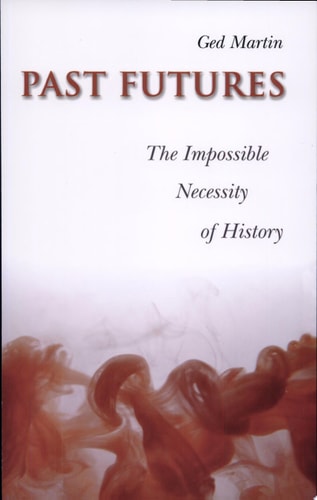
Past Futures: The Impossible Necessity of History
0
0
As an Amazon Associate and affiliate partner, Menrva Books earns from qualifying purchases. Learn more
Author Description
By nature, human beings seek to make sense of their past. Paradoxically, true historical explanation is ultimately impossible. Historians never have complete evidence from the past, nor is their methodology rigorous enough to prove causal links. Although it cannot be proven that 'A caused B, ' by redefining the agenda of historical discourse, scholars can locate events in time and place history once again at the heart of intellectual activity. In Past Futures, Ged Martin advocates examining the decisions that people take, most of which are not the result of a 'process, ' but are reached intuitively. Subsequent rationalizations that constitute historical evidence simply mislead. All historians can do is to locate them in time, to explain not why a decision was taken, but why then? To illustrate, Martin asks a number of questions: What is a 'long time' in history? Are we close to the past or remote from it? Is democracy a recent experiment, or proof of our arrival at the end of a journey through time? Can we engage in a historical dialogue with the past without making clear our own ethical standpoints? Although explanation is ultimately impossible, humankind can make sense of its location in time through the concept of 'significance, ' a device for highlighting events and aspects of the past. In so doing, Martin suggests a radical new approach to historical discourse.
Menrva's Summary
THE THESIS
The central problem this book addresses is the inherent impossibility of true historical explanation. Ged Martin argues that historians can never possess complete evidence or employ rigorous methodology to definitively prove causal links between past events. Instead of seeking to explain why decisions were made, Martin proposes focusing on when they were made and the intuitive nature of human decision-making, which is often later rationalized. The book explores concepts like the perception of 'long time' in history, the proximity of the present to the past, and the ethical considerations in engaging with historical narratives. Ultimately, Martin suggests that 'significance' can serve as a tool to make sense of our temporal location, offering a radical new perspective on historical discourse.
THE SCOPE MAP
- What constitutes 'long time' in historical analysis.
- The relationship between the present and the past.
- The nature of democracy as a historical phenomenon.
- The role of ethical standpoints in historical dialogue.
- The concept of 'significance' as a tool for understanding the past.
- A critique of traditional historical methodologies.
- The importance of intuitive decision-making in historical events.
- A proposed new approach to historical discourse.
THE AUTHORITY PERSPECTIVE
In 'Past Futures,' Ged Martin challenges conventional historical methodologies, proposing that true explanation of past events is ultimately impossible due to incomplete evidence and the limitations of causal proof. The book suggests a shift in focus from 'why' decisions were made to 'when' they occurred, emphasizing the intuitive nature of human choices. Martin's work is likely to appeal to scholars and students of history and philosophy interested in historiography and the theoretical underpinnings of historical inquiry. The proposed redefinition of historical discourse through the concept of 'significance' offers a thought-provoking perspective on how we engage with and understand the past.
Page Count:
305
Publication Date:
2004-01-01
Publisher:
University of Toronto Press
ISBN-10:
0802086454
ISBN-13:
9780802086457
Philosophy
History
Non-Fiction
Historiography
Community Tags
Similar Books