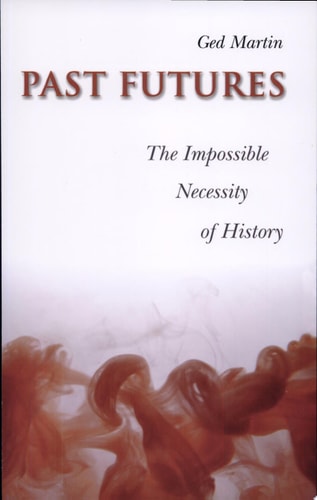
Past Futures
0
0
As an Amazon Associate and affiliate partner, Menrva Books earns from qualifying purchases. Learn more
Author Description
By nature, human beings seek to make sense of their past. Paradoxically, true historical explanation is ultimately impossible. Historians never have complete evidence from the past, nor is their methodology rigorous enough to prove causal links. Although it cannot be proven that 'A caused B,' by redefining the agenda of historical discourse, scholars can locate events in time and place history once again at the heart of intellectual activity. In Past Futures, Ged Martin advocates examining the decisions that people take, most of which are not the result of a 'process,' but are reached intuitively. Subsequent rationalizations that constitute historical evidence simply mislead. All historians can do is to locate them in time, to explain not why a decision was taken, but why then? To illustrate, Martin asks a number of questions: What is a 'long time' in history? Are we close to the past or remote from it? Is democracy a recent experiment, or proof of our arrival at the end of a journey through time? Can we engage in a historical dialogue with the past without making clear our own ethical standpoints? Although explanation is ultimately impossible, humankind can make sense of its location in time through the concept of 'significance,' a device for highlighting events and aspects of the past. In so doing, Martin suggests a radical new approach to historical discourse.
Menrva's Summary
THE THESIS
The book challenges the traditional methods of historical explanation by arguing that true causal links are ultimately impossible to prove due to incomplete evidence and insufficient rigor. Ged Martin proposes that historians should focus on the intuitive decisions people make, rather than the subsequent rationalizations that form historical evidence, and explore why decisions were made at specific times. The work questions concepts like 'long time' in history, the proximity of the present to the past, and whether democracy represents a recent experiment or the culmination of a temporal journey. It also considers the possibility of engaging in historical dialogue without compromising one's own ethical stance, suggesting that 'significance' can help make sense of our temporal location.
THE SCOPE MAP
- What constitutes a 'long time' in historical context.
- The relationship between the present and the past.
- The historical trajectory and significance of democracy.
- The ethical considerations in historical dialogue.
- The concept of 'significance' as a tool for understanding historical events.
- A redefinition of historical discourse focusing on intuitive decision-making.
- The limitations of historical evidence and methodology.
THE AUTHORITY PERSPECTIVE
The book is presented as a radical new approach to historical discourse, advocating for a re-evaluation of how historians interpret past events. It suggests that by focusing on the intuitive nature of human decisions and the concept of 'significance,' a more meaningful understanding of our temporal location can be achieved, even if absolute causal explanation remains elusive. The work prompts readers to consider fundamental questions about time, history, and the nature of historical inquiry itself. It aims to reposition history at the heart of intellectual activity by examining the 'why then?' of past decisions.
Page Count:
326
Publication Date:
2004-12-15
Publisher:
University of Toronto Press
ISBN-10:
144265886X
ISBN-13:
9781442658868
History
Non-Fiction
Philosophy
Community Tags
Similar Books














