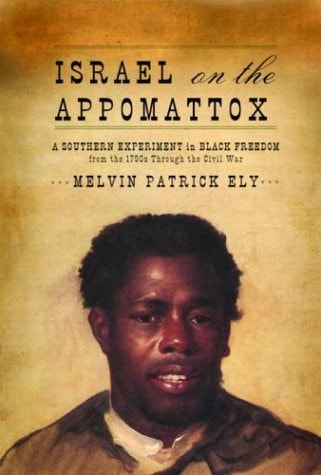
Israel on the Appomattox: A Southern Experiment in Black Freedom from the 1790s Through the Civil War
0
0
As an Amazon Associate and affiliate partner, Menrva Books earns from qualifying purchases. Learn more
Author Description
Thomas Jefferson condemned slavery but denied that whites and liberated blacks could live together in harmony. Jefferson’s young cousin Richard Randolph and ninety African Americans set out to prove the sage of Monticello wrong. When Randolph died in 1796, he left land for his formidable bondman Hercules White and for dozens of other slaves. Freed, they could build new lives there alongside white neighbors and other blacks who had gained their liberty earlier. Fittingly, the Randolph freedpeople called their promised land Israel Hill. These black Israelites and other free African Americans established farms, plied skilled trades, and navigated the Appomattox River in freight-carrying “batteaux.” Hercules White’s son Sam and other free blacks bought and sold boats, land, and buildings, and they won the respect of whites. Melvin Patrick Ely captures a series of remarkable personal and public dramas: free black and white people do business with one another, sue each other, work side by side for equal wages, join forces to found a Baptist congregation, move West together, and occasionally settle down as man and wife. Even still-enslaved blacks who face charges of raping or killing whites sometimes find ardent white defenders. Yet slavery’s long shadow darkens this landscape in unpredictable ways. After Nat Turner’s slave revolt, county officials confiscate and auction off free blacks’ weapons–and then vote to give the proceeds to the blacks themselves. One black Israelite marries an enslaved woman and watches, powerless, as a white master carries three of their children off to Missouri; a free black miller has to bid for his own wife at a public auction. Proslavery hawks falsely depict Israel Hill to the nation as a degenerate place whose supposed failure proves blacks are unfit for freedom. The Confederate Army compels free black men to build fortifications far from home, until Lee finally surrenders to Grant a few miles from Israel Hill.
Menrva's Summary
THE THESIS
of this book is that a unique, multiracial community in antebellum Virginia, known as Israel Hill, demonstrated that free blacks and whites could coexist and thrive, challenging prevailing notions of racial hierarchy.** The book details the establishment of Israel Hill by freed slaves and their white neighbors, beginning in the late 18th century, and chronicles their efforts to build independent lives through farming and skilled trades. It highlights the complex social dynamics, including business dealings, legal disputes, and even intermarriage, between free blacks and whites, as well as the persistent threat and impact of slavery on this community. The narrative explores instances of cooperation and conflict, illustrating both the possibilities and the profound limitations imposed by the institution of slavery, particularly in the wake of events like Nat Turner's rebellion and leading up to the Civil War.
THE SCOPE MAP
- What You Will Find:
- What You Will Find:
- What You Will Find:
- What You Will Find:
- What You Will Find:
- What You Will Find:
- What You Will Find:
THE AUTHORITY PERSPECTIVE
This book is regarded as a significant contribution to the understanding of African American history and the complexities of race relations in the antebellum South. Scholars have noted its detailed exploration of a unique multiracial community and its challenge to traditional historical narratives about slavery and freedom. The work is praised for its meticulous research, drawing on a wide array of primary sources to bring to life the individuals and events of Israel Hill. It offers a nuanced perspective on the possibilities and limitations of coexistence between races in a slaveholding society.
Page Count:
656
Publication Date:
2004-09-14
Publisher:
Knopf
ISBN-10:
0679447385
ISBN-13:
9780679447382
History
Biography
Non-Fiction
Social History
Community Tags
Similar Books