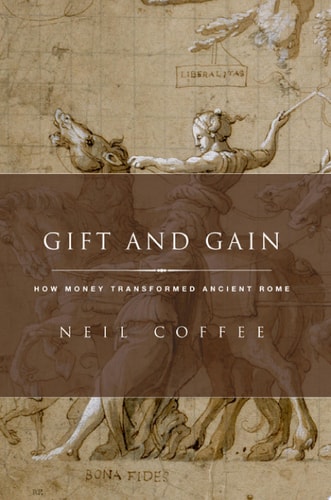
Gift and Gain: How Money Transformed Ancient Rome
0
0
As an Amazon Associate and affiliate partner, Menrva Books earns from qualifying purchases. Learn more
Author Description
'gift And Gain' Shows How, Over The Course Of Rome's Classical Era, A Vibrant Commercial Culture Progressively Displaced Traditional Systems Of Gift Giving That Had Long Been Central To Rome's Material, Social, And Political Economy, With Effects On Areas Of Life From Marriage To Politics. I. Orientation. Locating The Fault Line: Concepts And Scope. Ii. Early Rome: Foundation. Looking Forward From Archaic Rome. Iii. The Middle Republic: Adaptation. Adapting The Law In The Age Of Cato -- Ideological Flexibility: Cato And Ennius -- Life Before Liberality: Plautus And Terrence -- The Gracchi And The Failure Of Collective Generosity. Iv. The Late Republic: Exploitation. Crooked Generosity In The Late Republic -- Cicero Between Justice And Expediency -- Sallust And The Decline Of Reciprosity -- Caesar's Wicked Gifts -- Atticus: Banker, Benefactor, Paragon. V. The Early Empire: Separation. Prying Worlds Apart: The Augustan Response -- Seneca's Philosophical Cure. Vi. Conclusions. Halftway To Modernity. Neil Coffee. Includes Bibliographical References And Indexes.
Menrva's Summary
THE THESIS
This book investigates how the transition from traditional gift-based social structures to a commercialized monetary economy fundamentally altered the fabric of Roman society. Neil Coffee, a scholar of classical literature and history, utilizes a multidisciplinary approach that combines legal analysis, political history, and literary criticism. He argues that the rise of a market-oriented culture created a profound shift in how Romans perceived social obligations, political patronage, and personal relationships from the early Republic through the early Empire.
THE SCOPE MAP
What You Will Find
- Analysis of the shift from archaic gift-giving to monetary exchange.
- Examination of key Roman figures including Cato, Cicero, Caesar, and Seneca.
- Discussion of the impact of commercialization on marriage, law, and politics.
- Integration of literary texts by Plautus, Terence, and Sallust as historical evidence.
Scope Limits
- The book focuses primarily on the Roman elite and their political/social spheres rather than the daily economic lives of the common populace.
- It does not provide an exhaustive economic history of Roman trade, focusing instead on the cultural and ideological implications of money.
THE AUTHORITY PERSPECTIVE
Experts highlight this work as a nuanced contribution to the study of Roman social values and economic transformation. Readers frequently note the academic density of the prose, which requires a foundational understanding of Roman history to fully appreciate the author's arguments.
Page Count:
0
Publication Date:
2016-12-27
Publisher:
Oxford University Press, Incorporated
ISBN-10:
0190496452
ISBN-13:
9780190496456
History
Money rome
Social History
Ancient - Rome
Rome
Economic History
Community Tags
Other Editions(2)
Similar Books