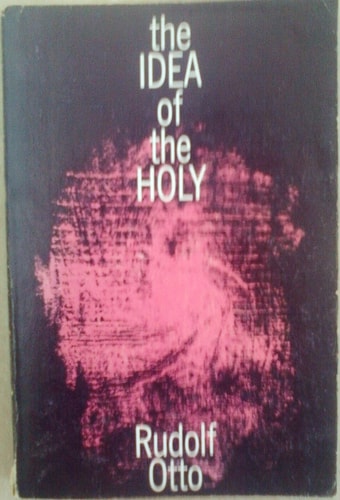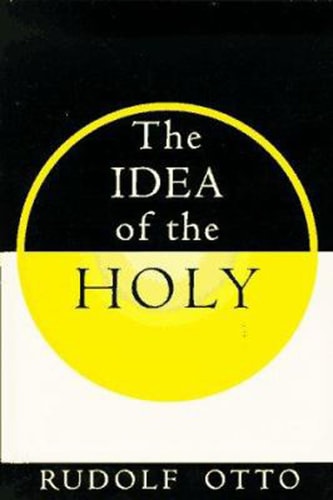
The Idea of the Holy
0
0
As an Amazon Associate and affiliate partner, Menrva Books earns from qualifying purchases. Learn more
Author Description
Before religion became morality touched with emotion it was the emotion itself, or a group of emotions, and it still is. These emotions are, in the translator's summary; the feeling of the uncanny, the thrill of awe or reverence, the sense of dependence, of impotence, or of nothingness, or again, the feelings of religious rapture and exaltation. The author of the present book calls them the non-rational feelings, the sense of the tremendous, the awful, the mysterious, or, in a word of his choosing, the numinous. Both author and translator make it clear that religion must accommodate both the numinous and the ethical, The Idea of the Holy (Das Heitige), which is fundamentally an inquiry into the non-rational, is a book which has established itself, since the English translation first appeared in 1923, as a classic in the field of religious philosophy.
Menrva's Summary
THE THESIS
This work investigates the nature of the non-rational experience of the divine, which the author terms the numinous. Rudolf Otto, a prominent German theologian and scholar of comparative religion, utilizes a phenomenological approach to dissect the religious experience beyond mere moral or ethical frameworks. He argues that the core of religious life resides in a specific set of emotions—awe, mystery, and the sense of the tremendous—that exist independently of rational thought or social morality.
THE SCOPE MAP
What You Will Find
- A comprehensive definition and analysis of the concept of the numinous.
- A distinction between rational, ethical religion and non-rational, experiential religion.
- Philosophical inquiry into the nature of the holy as a category of value.
- Examination of the psychological and emotional components of religious awe and dependence.
THE AUTHORITY PERSPECTIVE
Experts and scholars of religion consistently categorize this text as a foundational work in the phenomenology of religion. Readers frequently note the dense, academic nature of the prose, which requires careful engagement to grasp the author's nuanced theological arguments.
Page Count:
256
Publication Date:
1958-12-31
Publisher:
Oxford University Press
ISBN-10:
0195002105
ISBN-13:
9780195002102
Religion
Philosophy
Theology