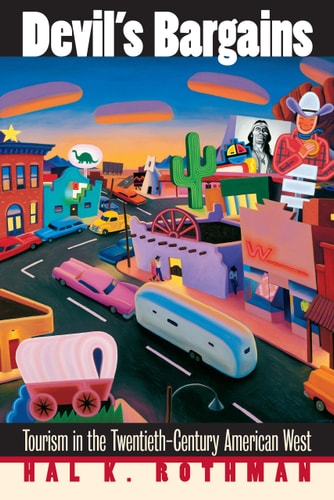
Devil's Bargains: Tourism in the Twentieth-Century American West
0
0
As an Amazon Associate and affiliate partner, Menrva Books earns from qualifying purchases. Learn more
Author Description
The West is popularly perceived as America's last outpost of unfettered opportunity, but twentieth-century corporate tourism has transformed it into America's "land of opportunism." From Sun Valley to Santa Fe, towns throughout the West have been turned over to outsiders—and not just to those who visit and move on, but to those who stay and control. Although tourism has been a blessing for many, bringing economic and cultural prosperity to communities without obvious means of support or allowing towns on the brink of extinction to renew themselves; the costs on more intangible levels may be said to outweigh the benefits and be a devil's bargain in the making. Hal Rothman examines the effect of twentieth-century tourism on the West and exposes that industry's darker side. He tells how tourism evolved from Grand Canyon rail trips to Sun Valley ski weekends and Disneyland vacations, and how the post-World War II boom in air travel and luxury hotels capitalized on a surge in discretionary income for many Americans, combined with newfound leisure time. From major destinations like Las Vegas to revitalized towns like Aspen and Moab, Rothman reveals how the introduction of tourism into a community may seem innocuous, but residents gradually realize, as they seek to preserve the authenticity of their communities, that decision-making power has subtly shifted from the community itself to the newly arrived corporate financiers. And because tourism often results in a redistribution of wealth and power to "outsiders," observes Rothman, it represents a new form of colonialism for the region. By depicting the nature of tourism in the American West through true stories of places and individuals that have felt its grasp, Rothman doesn't just document the effects of tourism but provides us with an enlightened explanation of the shape these changes take. Deftly balancing historical perspective with an eye for what's happening in the region right no
Menrva's Summary
THE THESIS
The twentieth-century American West, often perceived as a land of unfettered opportunity, has been fundamentally reshaped by the rise of corporate tourism, transforming it into a landscape of 'opportunism' where outsiders increasingly control local economies and communities. Hal Rothman examines how this industry evolved from early rail excursions to the Grand Canyon to sprawling destinations like Disneyland and Aspen, driven by increased leisure time and disposable income post-World War II. He reveals how the influx of tourism, while offering economic revitalization, subtly shifts decision-making power from long-term residents to corporate financiers, leading to a form of modern colonialism that alters the very fabric of Western communities.
THE SCOPE MAP
- The evolution of tourism in the American West from the early 20th century to the late 20th century.
- Case studies of various Western destinations, including major hubs like Las Vegas and revitalized towns like Aspen and Moab.
- Analysis of the economic and social impacts of tourism on local communities.
- The shift in power dynamics from residents to corporate investors in tourist-dependent towns.
- The concept of tourism as a new form of colonialism in the American West.
- The author's examination of the 'devil's bargain' between economic prosperity and loss of community authenticity.
THE AUTHORITY PERSPECTIVE
Hal Rothman's "Devil's Bargains" is recognized for its critical examination of the complex relationship between tourism and the American West. The book is noted for its detailed historical analysis, tracing the development of the tourism industry and its profound effects on the region's economic and social structures. Rothman's argument that tourism can lead to a subtle form of colonialism, where decision-making power shifts to external corporate interests, provides a thought-provoking perspective on community development and authenticity. The work is appreciated for its balanced approach, acknowledging the economic benefits while highlighting the significant intangible costs incurred by Western communities.
Page Count:
448
Publication Date:
1998-10-16
Publisher:
University Press of Kansas
ISBN-10:
0700609105
ISBN-13:
9780700609109
Travel
History
Business
Non-Fiction
Economics
Community Tags
Similar Books














