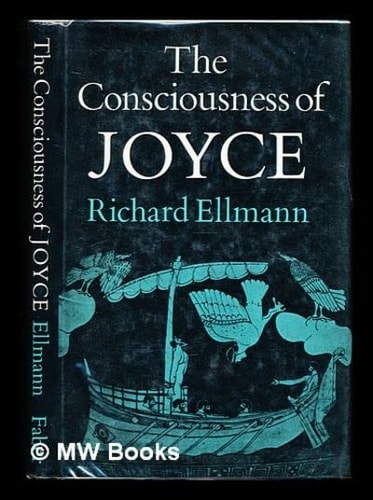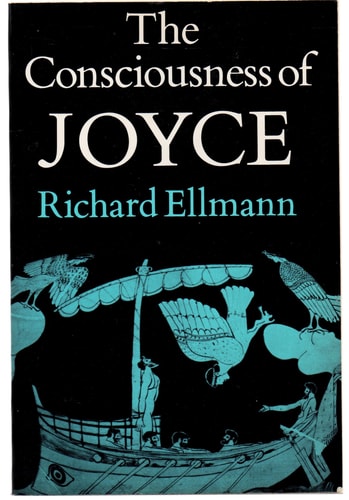
The Consciousness of Joyce
0
0
As an Amazon Associate and affiliate partner, Menrva Books earns from qualifying purchases. Learn more
Author Description
Traces the literary ancestry of Ulysses and discusses how Joyce triangulated himself with Homer and Shakespeare. Professor Ellmann demonstrates that Joyce, far from being apolitical, was revolutionary, working in his own oblique fashion to subvert existing institutions.
Menrva's Summary
THE THESIS
This work investigates the intellectual and political foundations of James Joyce’s creative process, specifically examining how he synthesized classical and canonical influences to construct his modernist vision. Richard Ellmann, a preeminent Joyce scholar, utilizes his extensive archival research and deep familiarity with the author's correspondence to argue that Joyce’s work was a deliberate, subversive act against established social and political institutions. By mapping the connections between Joyce’s personal life and his literary output, Ellmann provides a framework for understanding the author as a calculated revolutionary rather than an isolated aestheticist.
THE SCOPE MAP
What You Will Find
- Analysis of the literary lineage of Ulysses, focusing on Homeric and Shakespearean parallels.
- Examination of Joyce’s political consciousness and his methods of institutional subversion.
- Synthesis of biographical data and textual evidence from Joyce’s major works.
- Exploration of the 'triangulation' technique used to position Joyce within the Western canon.
THE AUTHORITY PERSPECTIVE
Experts regard this text as a foundational contribution to Joycean studies, noting its precision in linking biographical detail to complex narrative structures. Readers frequently highlight the clarity of Ellmann’s prose, which makes dense literary analysis accessible to both students and seasoned scholars of modernism.
Page Count:
160
Publication Date:
1981-04-02
Publisher:
Oxford University Press
ISBN-10:
0195028988
ISBN-13:
9780195028980
Biography
Literary Criticism
Modernism
Literary theory