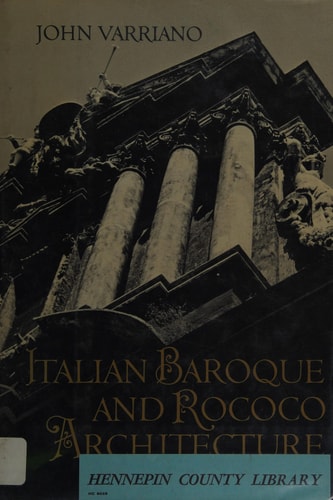
Italian Baroque and Rococo Architecture
0
0
As an Amazon Associate and affiliate partner, Menrva Books earns from qualifying purchases. Learn more
Author Description
From the late 1500s to the mid-1700s, Italy gave the world some of the liveliest and most imaginative structures in the history of architecture. This profusely illustrated book is the first comprehensive study in English of the works that emerged throughout the Italian peninsula during this critical period. "If Renaissance architecture was to be contemplated on an intellectual level," John Varriano writes, "Baroque architecture was to be experienced with the emotions and the senses." The grandiloquent projects of the Baroque age were generally sponsored, either directly or indirectly, by the Catholic Church, but as Varriano notes, their appeal has always transcended the immediate self-promotion of their patrons and held powerful sway over people of diverse cultural and religious backgrounds. Coming from an era when architecture was considered a true art, the best Baroque buildings are capable of provoking universal human responses. Italian Baroque and Rococo Architecture offers chapters on the key architects of the time--Gianlorenzo Bernini, Francesco Borromini, Pietro da Cortona, Guarino Guarini--as well as detailed treatments of the work of many less well-known architects who were active from Sicily to Venice. More than half of the 190 photographs and illustrations were made expressly for this book or have not previously been published. These pictures were chosen to convey the actual experience of the site.
Menrva's Summary
THE THESIS
This book investigates the evolution and sensory impact of Italian architecture from the late 16th century through the mid-18th century. John Varriano, a Professor of Art History, utilizes his academic expertise to analyze how Baroque and Rococo structures transitioned from intellectual Renaissance ideals to designs intended to engage the human senses and emotions. By examining the patronage of the Catholic Church alongside the creative output of diverse architects, the text argues that these buildings possess a universal appeal that transcends their original historical and religious contexts.
THE SCOPE MAP
What You Will Find
- Comprehensive analysis of architectural developments across the Italian peninsula from Sicily to Venice.
- Detailed profiles of major figures including Gianlorenzo Bernini, Francesco Borromini, Pietro da Cortona, and Guarino Guarini.
- A collection of 190 photographs and illustrations, many published for the first time, designed to simulate the physical experience of the sites.
- Examination of the shift in architectural philosophy from the intellectualism of the Renaissance to the sensory-focused Baroque and Rococo styles.
THE AUTHORITY PERSPECTIVE
Experts recognize this work as a foundational English-language study of the period, valued for its balance of scholarly rigor and accessible visual documentation. Readers frequently note the clarity of the prose and the effectiveness of the illustrations in conveying the spatial qualities of the featured buildings.
Page Count:
352
Publication Date:
1986-03-20
Publisher:
Oxford University Press
ISBN-10:
019503547X
ISBN-13:
9780195035476
Architecture
Non-Fiction
Architecture italy
Baroque
Art History
Community Tags
Similar Books