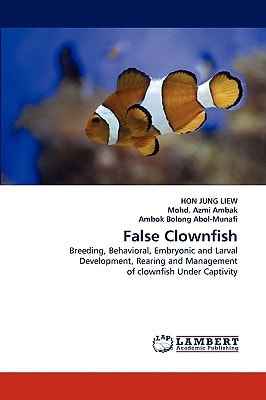
False Clownfish
0
0
As an Amazon Associate and affiliate partner, Menrva Books earns from qualifying purchases. Learn more
Author Description
This monograph provides information of false clownfish on their breeding, behavior, development stages and proper management. Ultimately, readers are able to maintain a successful false clownfish rearing by understanding their basic needs and behaviors to provide a comfortable and suitable environment for them. The monograph covers chapters discussing on biology and morphology of clownfish; their ecological distributions and their symbiotic lifestyle with anemones. Feed preparation and rearing tank set-up are well described with supporting figures for both larvae and mature clownfish. The most important chapter well explained on the false clownfish breeding techniques starting from the stages of pre-spawning, spawning and post spawning behaviors. Nevertheless, strong illustration of spawning, embryonic, larvae and juveniles rearing are provided with clear guidelines on feeding, weaning, and water quality monitoring. I believed that this book is an essential asset for aquaculturists and fish hobbyist or beginners who are interested to understand deeper on false clownfish and promote captive breeding program for ecological conservations and environment protections.
Menrva's Summary
THE THESIS
This monograph details the comprehensive aspects of false clownfish, from their biological underpinnings to practical rearing techniques. The authors, drawing on expertise in aquaculture and marine biology, present a structured guide covering the biology, morphology, ecological distribution, and symbiotic relationships of clownfish. It further elaborates on feed preparation, tank setup, and crucially, detailed breeding techniques including pre-spawning, spawning, and post-spawning behaviors, supported by strong illustrations of embryonic and juvenile development.
THE SCOPE MAP
- Biology and morphology of clownfish
- Ecological distributions and symbiotic lifestyle with anemones
- Feed preparation and rearing tank setup
- Detailed false clownfish breeding techniques (pre-spawning, spawning, post-spawning)
- Illustrations of spawning, embryonic, larvae, and juveniles rearing
- Guidelines on feeding, weaning, and water quality monitoring
THE AUTHORITY PERSPECTIVE
This book is presented as an essential asset for aquaculturists, fish hobbyists, and beginners interested in the captive breeding of false clownfish. The detailed coverage of breeding techniques, larval rearing, and management practices suggests it aims to equip readers with the knowledge for successful rearing and to promote conservation efforts through captive breeding programs. The inclusion of supporting figures and clear guidelines indicates a practical, instructional approach intended for both novice and experienced keepers.
Page Count:
88
Publication Date:
2010-02-03
Publisher:
Lap Lambert Academic Publishing GmbH KG
ISBN-10:
383834362X
ISBN-13:
9783838343624
Animals
Non-Fiction
Science
Marine Biology
Aquaculture
Ichthyology
Community Tags
Similar Books