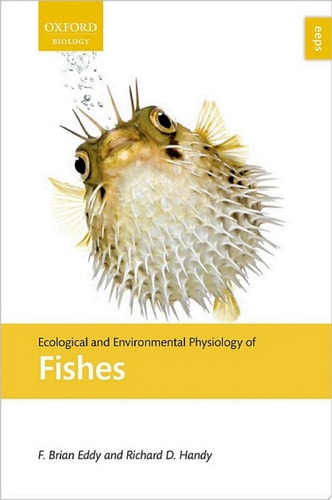
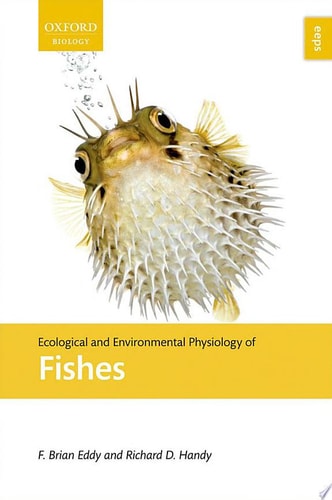
Ecological and Environmental Physiology of Fishes
0
0
As an Amazon Associate and affiliate partner, Menrva Books earns from qualifying purchases. Learn more
Author Description
Fishes have evolved to colonise almost every type of aquatic habitat and today they are a hugely diverse group of over 25,000 species. The evolution of this great diversity of species has resulted in a myriad of solutions to the demands posed by the aquatic environment. Ecological and Environmental Physiology of Fishes presents a current and comprehensive overview of fish physiology to demonstrate how living fishes function in their environment. As with other books in the Series, the emphasis is on the unique physiological characteristics of the fish, but with applications to questions of broad relevance in physiological ecology. A preliminary chapter introduces the aquatic environment and gives a general description of fish biology, evolution, and taxonomy. Subsequent sections discuss the particular problems of living in water, life in extreme environments, techniques for studying fish ecophysiology, and future research directions.
Menrva's Summary
THE THESIS
This text investigates the physiological mechanisms that allow fishes to thrive across diverse aquatic habitats and extreme environmental conditions. Authors F. Brian Eddy and Richard D. Handy synthesize current research to explain how evolutionary adaptations in fish physiology address the specific challenges of living in water. The book provides a framework for understanding the intersection of organismal function and environmental pressure.
THE SCOPE MAP
What You Will Find
- Comprehensive overview of fish physiology and evolutionary taxonomy
- Analysis of physiological responses to extreme aquatic environments
- Methodologies and techniques for conducting research in fish ecophysiology
Scope Limits
- Does not provide an exhaustive catalog of all 25,000 fish species
- Does not focus on commercial aquaculture or fisheries management practices
THE AUTHORITY PERSPECTIVE
Experts and academic reviewers identify this text as a foundational resource for students and researchers in aquatic biology. Readers frequently note the technical density of the prose, which is well-suited for upper-level undergraduate and graduate study in physiological ecology.
Page Count:
264
Publication Date:
2012-01-01
Publisher:
OUP Oxford
ISBN-10:
0191631639
ISBN-13:
9780191631634
Science
Biology
Marine Biology
Ecology
Ichthyology
Physiology
Zoology




![Insect hormones, (University reviews in biology [12])](https://storage.googleapis.com/menrva_img_storage/covers/9780050022917.jpg)