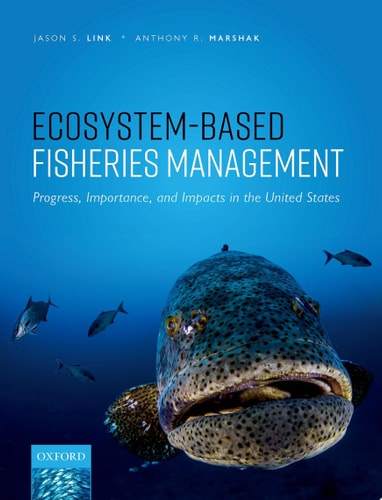
Ecosystem-Based Fisheries Management: Progress, Importance, and Impacts in the United States
0
0
As an Amazon Associate and affiliate partner, Menrva Books earns from qualifying purchases. Learn more
Author Description
Ecosystem-based fishery management (EBFM) is rapidly becoming the default approach in global fisheries management. The clarity of what EBFM means is sharpening each year and there is now a real need to evaluate progress and assess the effectiveness and impacts. By examining a suite of over 90 indicators (including socioeconomic, governance, environmental forcing, major pressures, systems ecology, and fisheries criteria) for 9 major US fishery ecosystem jurisdictions, the authors systematically track the progress the country has made towards advancing EBFM and making it an operational reality.The assessment covers a wide range of data in both time (multiple decades) and space (from the tropics to the poles, representing over 10% of the world's ocean surface area). The authors view progress towards the implementation of EBFM as synonymous with improved management of living marine resources in general, and highlight the findings from a national perspective. Although US-centric, the lessons learned are directly applicable for all parts of the global ocean. Much work remains, but significant progress has already been made to better address many of the challenges facing the sustainable management of our living marine resources.This is an essential and accessible reference for all fisheries professionals who are currently practicing, or progressing towards, ecosystem-based fisheries management. It will also be of relevance and use to researchers, teachers, managers, and graduate students in marine ecology, fisheries biology, biological oceanography, global change biology, conservation biology, and marine resource management.
Menrva's Summary
THE THESIS
This book investigates the operational progress and effectiveness of Ecosystem-Based Fisheries Management (EBFM) within United States marine jurisdictions. Authors Anthony R. Marshak and Jason S. Link, both established experts in marine resource management, utilize a comprehensive framework of over 90 indicators to evaluate how EBFM has transitioned from a theoretical concept to a practical management reality. By analyzing multi-decadal data across diverse geographic regions, the authors argue that EBFM serves as a critical mechanism for improving the sustainability of living marine resources.
THE SCOPE MAP
What You Will Find
- A systematic evaluation of 9 major US fishery ecosystem jurisdictions.
- A multi-dimensional indicator framework covering socioeconomic, governance, and ecological criteria.
- Longitudinal data analysis spanning several decades and diverse climate zones.
Scope Limits
- The primary focus is restricted to United States marine jurisdictions.
- The text does not provide a comprehensive manual for local-level policy implementation.
THE AUTHORITY PERSPECTIVE
Experts identify this work as a primary reference for fisheries professionals and graduate students seeking to understand the practical application of ecosystem-based management. Readers frequently note the technical density of the data analysis, which provides a rigorous foundation for evaluating national progress in marine conservation.
Page Count:
712
Publication Date:
2022-02-05
Publisher:
Oxford University Press
ISBN-10:
019284346X
ISBN-13:
9780192843463
Science
Kindle Store
Zoology
Aquaculture
Ecology
Marine Biology
Kindle eBooks
Categories
Oceanography
Community Tags
Similar Books